

High Impact Practices Student Showcase Fall 2026
Files
Download Full Text (47 KB)
Course Code
ZOO
Course Number
4910L
Faculty/Instructor
Senior Instructor Frank Logiudice
Faculty/Instructor Email
Abstract, Summary, or Creative Statement
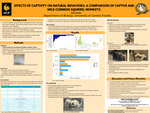
This study highlights the importance of evaluating behavior at both the species and individual levels. Compared to published activity budgets from wild squirrel monkey populations, the captive squirrel monkeys spent significantly less time foraging and more time resting, while also exhibiting distinct behavioral differences between individuals. These findings suggest that life history, interspecies and intraspecies social interactions, and responses to visitors may influence behavior in captivity. Continued behavioral monitoring can help identify unique welfare needs and support strategies supporting the expression of natural behaviors and improve overall animal welfare.
Keywords
Zoo; Squirrel Monkey; Behavioral Research; ZooMonitor; Animal welfare
Recommended Citation
Poirier, Chloe, "Effects of Captivity on Natural Behaviors: A Comparison of Captive and Wild Common Squirrel Monkeys" (2026). High Impact Practices Student Showcase Fall 2026. 21.
https://stars.library.ucf.edu/hip-2026fall/21
Accessibility Statement
This item was created or digitized prior to April 24, 2027, or is a reproduction of legacy media created before that date. It is preserved in its original, unmodified state specifically for research, reference, or historical recordkeeping. In accordance with the ADA Title II Final Rule, the University Libraries provides accessible versions of archival materials upon request. To request an accommodation for this item, please submit an accessibility request form.