

High Impact Practices Student Showcase Spring 2026
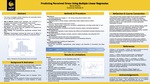
Predicting Perceived Stress Using Multiple Linear Regression
Files
Download Full Text
Course Code
STA
Course Number
4164
Faculty/Instructor
Nathaniel Simone
Faculty/Instructor Email
nathaniel.simone@ucf.edu
Abstract, Summary, or Creative Statement
This study examined whether behavioral and personality factors, including sleep, screen time, and personality traits, can be used to predict stress levels. Using a sample of 100 participants, a multiple linear regression model was estimated to assess the relationship between stress and predictors including sleep duration, screen time, neuroticism, agreeableness, and sleep category, as well as selected interaction terms. Results indicated that the overall model was statistically significant but explained only a small to modest proportion of variance in stress (adjusted R² = .087). Among the predictors, agreeableness was the only significant variable, with higher levels associated with greater reported stress. Other variables, including screen time, neuroticism, and sleep category, were not significant predictors in the final model. These findings suggest that personality traits, particularly agreeableness, may play a role in stress experiences, although much of the variability in stress remains unexplained. Attempting to fit a linear model to psychological data proved to be a nuanced and messy process when assessing aspects like model reliability or true assumptions of the data. Overall, the results highlight the complexity of predicting psychological outcomes and underscore the importance of considering both individual differences and additional contextual and statistical factors in future research.
Keywords
Linear regression, prediction, stress, psychological health, model building, lifestyle factors, behavioral factors
Recommended Citation
Murphy, Macey K., "Predicting Perceived Stress Using Multiple Linear Regression" (2026). High Impact Practices Student Showcase Spring 2026. 58.
https://stars.library.ucf.edu/hip-2026spring/58
Accessibility Statement
This item was created or digitized prior to April 24, 2026, or is a reproduction of legacy media created before that date. It is preserved in its original, unmodified state specifically for research, reference, or historical recordkeeping. In accordance with the ADA Title II Final Rule, the University Libraries provides accessible versions of archival materials upon request. To request an accommodation for this item, please submit an accessibility request form.