
High Impact Practices Student Showcase Spring 2026
Welcome to the Spring 2026 Amy Zeh High Impact Practices Student Showcase!
Visit the Main Showcase Page.
Find more information about the showcase.
The projects below formed part of the virtual showcase. See the program for the in-person showcase .
Amy Zeh HIP Course Showcase Spring 2026 Winners
Sponsored by UCF’s Student Government
Judges' Choice Winners from the Virtual Event
1st Place
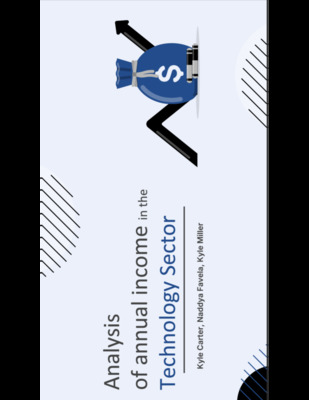
- Kyle Miller, Kyle Carter, Naddya Favela (Research Intensive), Analysis of Workplace Attributes on Annual Income in the Technology Sector
2nd Place
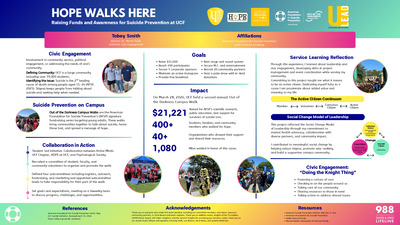
- Tobey Smith (Service-Learning), Hope Walks Here: Raising Funds and Awareness for Suicide Prevention at UCF
3rd Place
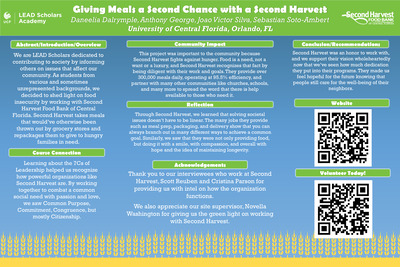
- Shayna Caddell, Lucia Hernandez, Correna Bartow, Jonathan Lungstrum, Kevin Wechsler (Service-Learning), Harvesting Hope in Central Florida with Second Harvest Food Bank
Honorable Mentions
- Nolan Ware, Jack Sosa, Chaz LaFlair, Anthony Sokolov, Aidan Hanratty (Service-Learning), Ferrofluids: Magnetic Liquids in Motion
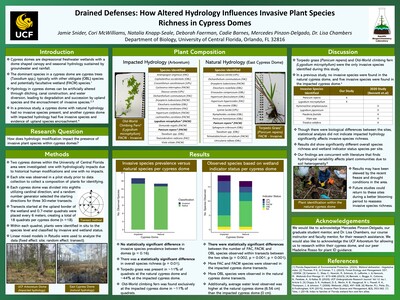
- Jamie Snider, Cori McWilliams, Natalia Knapp-Seale, Deborah Faerman (Research Intensive), Drained Defenses: How Altered Hydrology Influences Invasive Plant Species Richness in Cypress Domes
- Gianna Marzullo, Haydn Bonner, Kristina Puscher, Anna Mullins, Gabriella Echeverria, (Service-Learning), Small Acts, Big Impacts: Supporting Hearts for the Homeless
- Isabella Anderson, Jenny Tran, Mia Bukritsky, Kaito Powell, Madison Renda, (Research Intensive), AI Usage and Student Performance
- Yara Elrebey, Keoni Tembrina (Integrative-Learning Experience), Diagnosing Understanding: A clinical approach to teaching general chemistry
Audience Awards from the In-Person Event on April 22, 2026
Grand Prize
- Tara Haubrich, Giavanna Harrington, Jessie Shaffer, Maddison Magyar, Caroline Figueroa (Research Intensive), What the Shell? The Effects of Anthropogenic Wetland Modification on Freshwater Turtle Communities
1st Place
- Danielle Haddox, Katherine Schofield, Ondraya Moore, Nicholas Delatour (Research Intensive), Generational exposure to social media in relation to world events
2nd Place
- Madelyn Moyers, Isabela Rocha, Madison Figueiredo, Sophia Rivera (Service Learning), Jordon Smelski Foundation Pitch
3rd Place
- Terry Dinh, Zhi Lin (Integrative-Learning Experience), Analysis of VO2 & Resting Metabolic Rate assessment for Patient Centered-Care
Honorable Mentions
- Christopher Mayol, Brian Nguyen, Kai Djuren (Global Learning), The Impact of Gaming on Youth
- Avarey Johnson, Tai Powell, Rachel Flis, Rhees Henderson, Enno Turner (Research Intensive), Scute City: Impact of Urbanization on Body Condition of Kinosternon baurii in Central Florida
- Cami Dobson, Addyson Jones, Alexandra Boveil, Giovanni Gioia (Service-Learning), Battling Human Trafficking: How Social Media Advertising Influences Awareness
- Misty Zamora, Juan Sanchez, Geanluka Guedes de Souza, Leah Darby (Service-Learning), Advocating for Amoeba Awareness: The Jordan Smelski Foundation Media Project




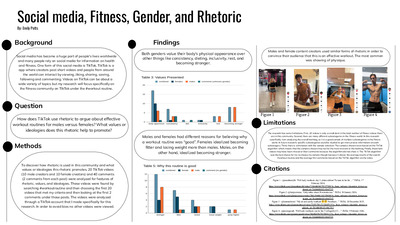
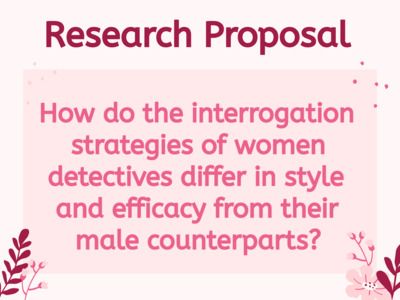
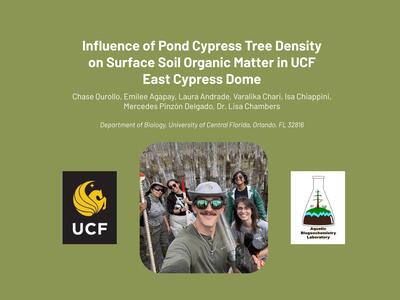
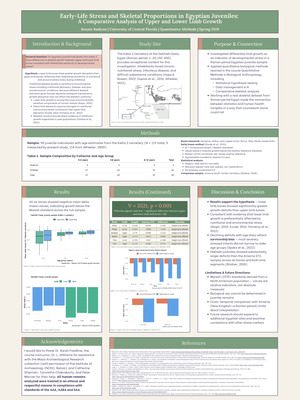

-

Culture Audit - Save a Life Pet Rescue
Grace L. Kmak, Kaley A. Chriswell, Carter Roberts, Antonio Pizza, and Caroline Parrott
Our project was a culture audit on the non-profit save a life pet rescue. Our goal was to analyze how the group works along with determine if there is any areas of improvement for the organization. Through this, we learned that any ability to give back can make an impact for all things. Whether it be dogs or families.
-
Tracing Evolution Through Teeth: Dental Morphology of the Lagoa Santa Fossil Population
Kelsey Aaron
This study examines dental morphological variation among early South American populations, focusing on individuals from the Lagoa Santa region and coastal shellmound (sambaqui) populations in Brazil. Dental nonmetric traits were recorded using the Arizona State University Dental Anthropology System (ASUDAS), a standardized method for assessing crown and root morphology across populations (Qaqa et al., 2026). These traits are highly heritable and largely unaffected by environmental pressures, making them valuable for reconstructing population history, gene flow, and ancestry (Tinoco et al., 2016). Comparative analysis incorporates global dental variation and reference patterns associated with archaic hominins, including Neanderthals. Traits such as increased expression of Cusp 6, complex groove patterns, and accessory cusp development are more frequently observed in archaic populations and are often used to distinguish them from modern humans (Scott et al., 2018). By evaluating the frequency and distribution of these traits in Lagoa Santa and sambaqui samples, this study assesses whether early South American populations fall entirely within modern human variation or exhibit overlap with archaic morphological patterns.
Statistical analyses were conducted in RStudio to evaluate differences in trait frequencies across populations and to test for patterns of association. Results indicate that while both Lagoa Santa and sambaqui populations align broadly with modern human variation, they exhibit distinct trait distributions consistent with regional differentiation. These findings contribute to discussions of early human migration into the Americas and support the hypothesis that Lagoa Santa populations may reflect a distinct migration event with unique morphological signatures.
-
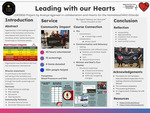
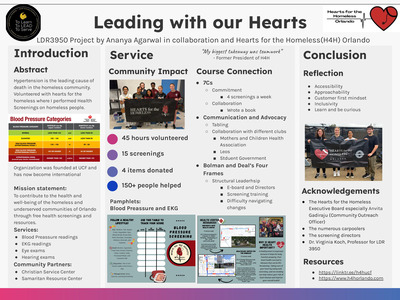
Leading with our hearts
ANANYA AGARWAL
This past semester I volunteer with hearts for the homeless Orlando where I performed health screenings on homeless people and contributed to donation drives. Hearts for the homeless has a very rich history. It was founded by a former UCF Student Andrew Aboujaoude, who was also a fellow Lead Scholar. He saw a very large issue in the homeless community that hypertension or high blood pressure was one of the leading causes of death. He created hearts for the homeless to help solve this issue by bringing free regular health screenings to the homeless community of Orlando. Hearts for the Homeless is dedicated to the mission To contribute to the health and well-being of the homeless and underserved communities of Orlando through free health screenings and resources.These screenings included Blood Preassure readings, EKG readings, Eye exams, and Hearing exams.
-
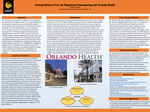
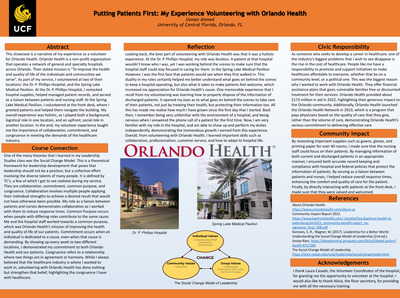
Putting Patients First: My Experience Working with Orlando Health
Usman S. Ahmed
This showcase is a narrative of my experience as a volunteer for Orlando Health. Orlando Health is a non-profit organization that operates a network of general and specialty hospitals across Orlando. Their stated mission is “To improve the health and quality of life of the individuals and communities we serve”. As part of my service, I volunteered at two of their locations: the Dr. P. Phillips Hospital, and the Spring Lake Medical Pavilion. At the Dr. P. Phillips Hospital, I restocked hospital supplies, helped managed patient records, and served as a liaison between patients and nursing staff. At the Spring Lake Medical Pavilion, I volunteered at the front desk, where I greeted patients and helped them navigate the building. My overall experience was holistic, as I played both a background, logistical role in one location, and an upfront, social role in another location. In the end, my volunteer experience taught me the importance of collaboration, commitment, and congruence in meeting the demands of the healthcare industry.
-
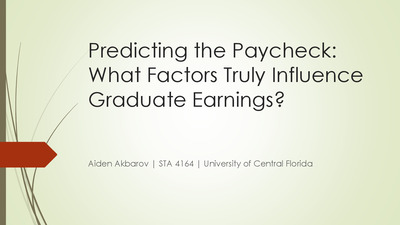
What Truly Drives Graduate Earnings?
Aiden Akbarov
The goal of my project, Predicting the Paycheck: What Factors Truly Influence Graduate Earnings?, was to see if we could actually predict a college graduate's starting salary using data instead of just guessing. I used a dataset of 172 majors from the American Community Survey to look at how a student's field of study, the gender balance of their major, and the current job market all impact their first paycheck. I wanted to create a tool that helps students understand the financial reality of their degree before they even graduate.
To get my results, I used a Multiple Linear Regression model with a 70/30 data split. This means I used 70% of the data to teach my model and kept the other 30% hidden to test it later. I had to be very careful about which variables I included; I left out things like raw population counts to avoid double-counting information - what statisticians call multicollinearity. I even had to fix a tricky error where the Interdisciplinary major category broke my code, which taught me that real-world data is rarely perfect.
I learned two major things from this project. First, the Share of Women in a major is a huge factor - for every 10% increase in female representation, the predicted salary dropped by about $1,600. Second, my model was surprisingly accurate, with a Mean Absolute Error of only $4,006. This proves that while the job market is complex, we can use data science to find clear patterns that help people make better decisions about their futures.
-
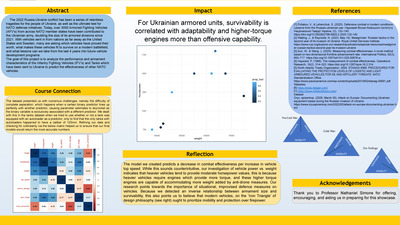
AI Usage and Student Performance
Isabella J. Anderson, Jenny Tran, Mia Bukritsky, Kaito Powell, and Madison Renda
The purpose of our project is to research whether a student's AI usage intensity can predict their exam scores, or if their academic ability holds more importance. We obtained data for our research from an online source called Hugging Face. Our variables were the average number of back-and-forth messages between the student and the AI, and AI usage depth. We also looked at students based on grade category. Through graphing and collinearity examination, we decided on a final model that would best predict the exam scores of a student. We found that AI usage does not significantly impact the exam score of a student. Rather, exam scores are more accurately determined by assignment completion consistency
The project can be viewed at https://drive.google.com/file/d/1SCL_VEdjqb71KwF87K7OEIh0jJYMajP8/view?usp=sharing
-
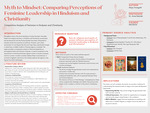
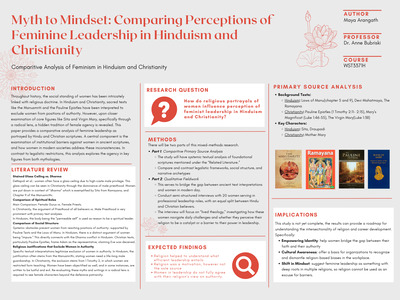
Myth to Mindset: Comparing Perceptions of Feminine Leadership in Hinduism and Christianity
Maya Arangath
This research project investigates the intersection of religion and feminine leadership by comparing barriers in Hinduism and Christianity found in their sacred texts. The purpose of the study is to identify if the customs followed in each tradition affects women in positions of authority in modern day. To uncover that, this project will use a two-part mixed methods approach. First, a primary source comparative analysis will be completed, followed by an in-depth interview focusing on the living theology. A key takeaway from the study so far is the nuanced ways each religion shows feminism. The study suggests that feminism is deeply rooted within religion.
-
Our Time at Share The Care
Makenna Arnott, Amy Hochhalter, Ava Palazzolo, and Caelyn Augustin
Our service-learning project focused on supporting Share the Care, a nonprofit organization dedicated to providing education, training, and support to family caregivers. The organization operates on the vision of a community where every caregiver has the support needed to maintain their own well-being while caring for a loved one. Their mission is to provide the necessary services to enable caregivers to keep family members at home, and delaying or eliminating the need for institutional care. Our group supported this mission by providing companionship and engagement for the elderly through interactive activities, games and arts and crafts. Overall, we learned compassion for those in the elderly and disabled community ad the impact that caregiver's fatigue can have not only on family, but also how it directly impacts the quality of care that those who require it receive. In summation, we learned both the organizational and leadership culture of a non-profit such as Share the Care, as well as the compassion it takes for this field of work and how we can apply this within our own lives and community involvement.
-

Women in Industrial Engineering Leadership and Barriers to Advancement
fiorella barney
This research investigates how organizational and cultural barriers influence the advancement of women into leadership positions within industrial engineering. Despite being one of the more gender-balanced engineering disciplines at the entry level, industrial engineering remains largely male-dominated in leadership, and this project set out to understand why that gap persists and what sustains it.
To explore this question, I conducted a review of seven peer-reviewed sources organized around five themes: the scope of underrepresentation, organizational barriers, gendered workplace culture, early career pipeline effects, and attrition. I then conducted a qualitative, semi-structured interview with a woman who began her career as a technician at Lockheed Martin, where she discovered her passion for engineering, and eventually advanced to director-level roles across multiple companies.
Two findings stood out most. First, structural push-out rather than personal choice is the primary driver of women leaving engineering. Harassment, wage inequity, and isolation are systemic, not incidental. Second, informal networks matter more than formal systems in women's advancement, which means women without access to those networks face compounding disadvantage.
This project deepened my understanding of the field I am entering and reinforced my belief that representation in industrial engineering is not symbolic , it is structural. The voices and experiences uncovered through this research made clear that this conversation is not just academic. It is necessary work.
-
Constrained Freedom: Economic Strain, Time Control, and Perceived Autonomy in Life
Lorena E. Black
Autonomy is often framed as an individual capacity rooted in personal choice, discipline, and self-determination, with dominant cultural narratives positioning freedom as something earned through effort and responsibility. This study challenges that assumption by examining autonomy as a socially structured and unequally distributed condition shaped by material and temporal constraints. Drawing on classical and contemporary sociological frameworks—including Marx’s analysis of labor and material dependence, Weber’s account of disciplined rationality, and Antonio Gramsci’s concept of cultural hegemony—this research positions perceived autonomy as an outcome produced through economic and institutional arrangements rather than solely through individual will. While existing literature has extensively examined economic insecurity, precarious labor, and time discipline, perceived autonomy is often treated as a secondary variable, typically in relation to stress or well-being. This study addresses that gap by analyzing autonomy as a primary outcome in its own right. Using a structured, anonymous online survey administered via Qualtrics, this research measures perceived autonomy, financial strain, and time constraints among undergraduate students at the University of Central Florida. It is hypothesized that increased economic strain and greater time pressure will be associated with diminished perceptions of control. Undergraduate students provide a particularly relevant population due to their positioning within overlapping systems of financial limitation, institutional scheduling, and labor precarity, allowing for a focused examination of how structural conditions shape the lived experience of freedom.
-
Orange County Animal Services | Adoption Awareness
Cameron Braun, Grace Exum, Caitlyn Bray, Mikaela Simpson-Hose, and Shelby Ferguson
This project focused on promoting pet adoption awareness in partnership with Orange County Animal Services (OCAS). The purpose of our work was to help increase community awareness about the importance of adopting animals from shelters. Alongside my teammates, we participated in outreach activities where we held signs, interacted with the public, and shared information about adoptable animals and the benefits of adoption.
Through this experience, we aimed to encourage more people to consider adoption as a first option when looking for a pet. One key thing I learned was how effective and impactful direct community engagement can be in influencing people’s perspectives and decisions. I also gained a better understanding of the challenges animal shelters face, including limited space and resources, as well as the struggles the staff overcome to make the animals comfortable. Overall, this project showed me how small actions, like raising awareness, can contribute to meaningful change in the community.
-
Reliability of Professor Ratings
Tridung Bui, Naomi Waddell, Diego Quinones, Kiran Pittan, and Fabricio Escrich
-
Harvesting Hope in Central Florida with Second Harvest Food Bank
Shayna Caddell, Lucia Hernandez, Correna Bartow, Jonathan Lungstrum, and Kevin Wechsler
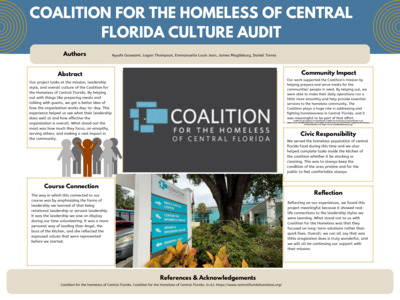
We conducted a culture audit on Second Harvest Food Bank, where we examined the organization and its enacted and espoused values. We used the Social Change Model and the 7Cs to evaluate our observations.
We completed this by individually volunteering for 15 hours. We did many tasks including but not limited to, examining donations, packaging meat, and boxing up meals. Throughout our time, our group learned about the different processes this organization uses. Based on concepts from our Intermediate Foundations of Leadership class and our interview with Sarah Heath, Volunteer Lead, we were able to reflect on how Second Harvest Food Bank prioritizes values from the Social Change Model and enacts on their mission/ vision statement to provide the upmost care for Central Florida residents.
-
The Analysis of Factors that Lead to Burnout in Postsecondary Students
Allicyan Chin
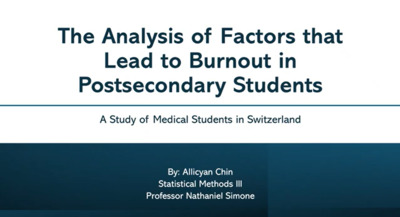
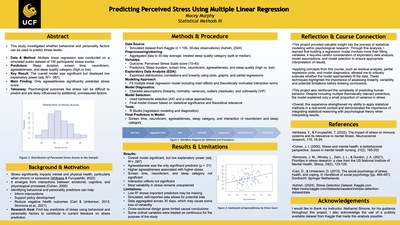
Medical students face intense academic pressure, which frequently results in severe mental exhaustion and burnout. The motivation behind this analysis was to identify the key academic and psychological factors behind burnout with a Kaggle sample dataset, of 886 medical students based in Switzerland. I conducted a multiple linear regression analysis while utilizing a various model selection processes to find the most significant predictors of exhaustion in medical students.
The finalized model demonstrated that a student's Curriculum Year, Anxiety Score, and Academic Motivation successfully explained approximately 30% of the variance in burnout levels, with Curriculum Year being the strongest predictor overall. Burnout is not simply a result of “studying too hard” but more so, stemmed from the increased pressure and anxiety that medical students face as they progress into their demanding curriculum. I would highly recommended universities all of the world implement more targeted mental health interventions and support these transition years to protect the well-being of our future medical professionals.
-
The Impact of Lifestyle Factors on Sleep Duration
Jamal C
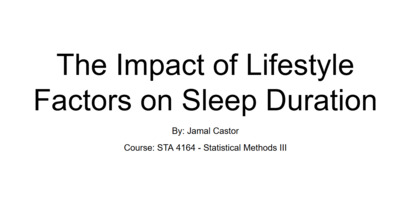
This project examines the impact of lifestyle factors on sleep duration using a multiple linear regression model. The dataset was sourced from Kaggle and includes 374 individuals and various predictors such as stress level, physical activity, heart rate, and age. Exploratory data analysis revealed a strong negative relationship between stress and sleep duration, while physical activity showed a weaker positive relationship.
A regression model was used to test these relationships. The results indicate that stress level is the most significant predictor of sleep duration, with higher stress linked to reduced sleep. Physical activity also showed a statistically significant positive effect, although much smaller. Heart rate and age were not found to be significant predictors.
Model diagnostics, including residual plots and Q-Q plots, suggest that the assumptions of the regression model are reasonably satisfied. One thing I learned from this project is the importance of stress management in improving sleep outcomes. One limitation of the study is that the dataset is synthetically generated, meaning real world data would improve accuracy.
-
Perceptions of Social Mobility and Their Impact on Attitudes Toward Universal Basic Income
Casey S. Courtright
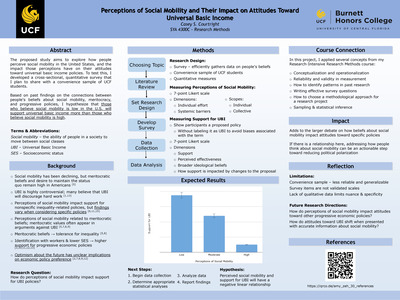
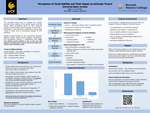
Despite the fact that social mobility has been declining in recent generations, meritocratic beliefs and a desire to maintain the status quo remain high among Americans. This may be in part due to Americans' tendency to be overoptimistic about their economic prospects. Could these inaccurate beliefs about social mobility be related to a lack of support for policies that address income inequality?
The proposed study aims to explore how people perceive social mobility in the United States and the impact those perceptions have on their attitudes toward universal basic income (UBI) policies. To test this, I developed a cross-sectional, quantitative survey that measures different dimensions of perceived social mobility and support for UBI, as well as how that support might be impacted by specific changes in policy implementation.
I expect to find that perceived social mobility and support for UBI will have a negative linear relationship, i.e., people who think social mobility is low will support UBI more than those who think social mobility is high. Understanding the link between beliefs about the world and specific policy preferences is important, as it can serve as a major step toward reducing political polarization and implementing policies that are consistent with social realities.
-
Advocating for Amoeba Awareness - The Jordan Smelski Foundation Media Project
Leah Darby, Juan Sanchez, Misty Zamora, and Geanluka Guedes de Souza
Throughout this semester, our advertising group worked closely alongside the Jordan Smelski Foundation to broaden their reach and inform our local community about the dangers of freshwater amoebas. The foundation works in the honor of Jordan Smelski, who passed away in 2014 after contracting this dangerous amoeba. We hope to create a more informed world to prevent further tragedies from happening.
Some of the tasks we worked on included identifying weaknesses in the foundation's current social media approach, proposing new ideas to help broaden their outreach, and conducting field research such as the mass-distribution of surveys. In the end, we hope that our findings will help the foundation grow and inform others about their mission.
-
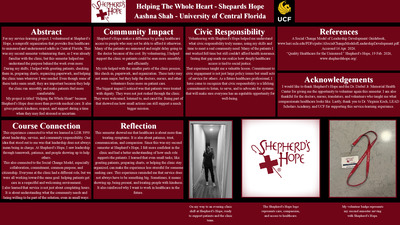
Shepherd's Hope
Madisyn M. DeMar
For my service learning project I wanted to work with Shepherd’s Hope. Shepherd’s Hope is a non profit organization that provides healthcare to those who are uninsured. Their mission statement is that they are “dedicated to our shared mission to provide free, quality healthcare to the uninsured.” During my time at Shepherd’s Hope I was involved in many different experiences. I learned how to be a discharge coordinator and discharged patients from their clinic visit and was able to give them resources on the next steps of their treatment plans. I also shadowed eligibility and nursing. Both positions allowed me to see how the EPIC system worked, which is their check- in system for patients, and allowed me to gain more patient interaction. I met and volunteered alongside a multitude of doctors, nurses, and students in order to make Shepherd’s Hope's mission statement a reality.
-

Punta Gorda, Honduras: History, Culture, and the Heart of the Garifuna People
Chassidy Diaz
Along the northern coast of Honduras, where the Caribbean Sea meets lush tropical landscapes, lies the village of Punta Gorda, a place where history, culture, and identity intertwine. Known as one of the earliest Garifuna settlements in Central America, Punta Gorda is more than just a village; it is a living testament to resilience and heritage. The Garifuna people, descendants of West African, Indigenous Caribbean, and Arawak ancestries, arrived on these shores in the late 18th century after being exiled from St. Vincent and the Grenadines, bringing with them a rich cultural legacy that continues to thrive today.
In Punta Gorda, history is not confined to the past; it is woven into everyday life. The rhythms of traditional drumming echo through the village, accompanying dances and songs that preserve stories of survival and community. The Garifuna language, food, and spiritual practices remain central to daily life, reflecting a deep connection to both land and ancestry.
Despite challenges brought by modernization and economic pressures, Punta Gorda stands as a cultural stronghold. It represents the enduring spirit of the Garifuna people, a community that has preserved its identity through centuries of displacement and change. Ultimately, Punta Gorda is not just a geographic location, but the heart of a people whose history and culture continue to shape their present and inspire their future.
-
Battling Human Trafficking: How Social Media Advertising Influences Awareness
Cami Dobson, Addyson Jones, Giovanni Gioia, and Alexandra Boveil
In our Principles of Advertising class, our group analyzed an anti-human trafficking non-profit organization, The Lifeboat Project, to create an ad campaign. Specifically, we focused on how to utilize social media in order to reach a target demographic. The Lifeboat Project aims to raise awareness on human trafficking, while also supporting victims through their resources. The purpose of our project was to promote the organization's goal of visibility and prevention tools.
First, we developed our target audience, and created a target persona. We conducted research on the organization and competitors. Using this information, we constructed survey questions, and distributed them to college students on campus. Finally, using all the information we gained, in our studies, brand research, and data, we created mock social media posts the organization could use to improve outreach. During the project, as a group, we learned the collaborative work it takes to develop an ad campaign and how to best reach a target demographic, while working to support a nonprofit organization.
-
Helping Instill Hope in Our Local Community
Audrey T. Dowdell, Shelby Luffman, Brian Medina, and Kimberly Vega
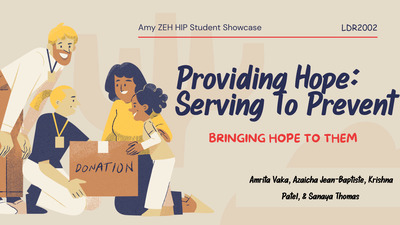
At the core of our service project were our shared pillars as a group; serving our local Orlando area, fostering habits of sustainability, and growing our skills as leaders. HOPE Helps as an organization aligned with these values, as their dedication to addressing hunger, homelessness, and clothing waste. We saw these corresponding ideals as an opportunity for our group to exercise and expand upon the skills we have learned from LEAD Scholars Academy, such as styles of leadership and the Social Change Model. Our time volunteering at HOPE Helps consisted of accepting and sorting clothing and houseware donations to the organization thrift store, cleaning and stocking shelves at their food pantry, and maintaining a welcoming and uplifting space for staff, volunteers, customers, and clients alike. These activities resulted in takeaways such as the importance of communication between our own team, and the other volunteers at the organization. Establishing a common goal, building trust, and exchanging ideas and knowledge was key in providing the best service and cultivating the best relationships while volunteering at HOPE Helps.
-
Growing Leaders Through Agriculture: A Service-Learning Experience at the Polk County Youth Fair
Sophia Dufour
For my service-learning project, I completed 40 volunteer hours at the Polk County Youth Fair in the rabbit department under the supervision of Rita Fletcher. The purpose of this project was to support a community-based agricultural program that provides youth with opportunities to develop responsibility, confidence, and hands-on experience through showing animals. My key responsibilities included assisting with the check-in and check-out of rabbits, supporting the American Rabbit Breeders Association (ARBA) judge during evaluations, and serving as a rabbit showmanship judge.
Through these activities, I was able to contribute to the organization and fairness of the event while gaining real-world experience in a fast-paced environment. One of the most important things I learned was that leadership is not always about being in charge, but about being dependable, detail-oriented, and willing to step up when needed. I also learned the importance of making fair and thoughtful decisions, especially when others are relying on your judgment. Overall, this experience strengthened my understanding of civic responsibility and helped me grow as a more engaged and accountable member of my community.
-
Does dosage management of Levothyroxine during Ramadan improve outcomes for hypothyroidism?
John Duran, Dillon Moya, Ethan Cabral, Renan Rodriguez, and Mia Ortiz
Ramadan fasting alters circadian rhythms and meal timing, interfering with the standard dosage of levothyroxine (LT4) on an empty stomach and impact its absorption. The presentation examines whether dosage management of levothyroxine during Ramadan improves the livelihood of patients with hypothyroidism. Hypothyroidism, characterized by deficient production of thyroid hormones (T3 and T4), leads to elevated thyroid-stimulating hormone (TSH) levels due to reduced negative feedback. Since LT4 is used to normalize TSH levels, disruptions in dosing timing during fasting may result in suboptimal thyroid control. A clinical trial was analyzed comparing regular LT4 dosing with an increased dose of 25 mcg during Ramadan. Results demonstrated that patients receiving the increased dose stabilized TSH levels within normal range, while the control group experienced elevated TSH levels during and the end of Ramadan. Supplemental studies further supported that LT4 timing does not significantly compromise thyroid function, suggesting adaptability in treatment strategies. These findings emphasize that a modest increase during Ramadan may help stabilize thyroid function and improve patient outcomes. However, limitations such as small sample size, single-center design, and lack of weight-based dosing highlight the need for further research. Clinically, individualized dosing adjustments, patient education, and close monitoring of thyroid function are recommended to optimize during prolong fasting periods.
-
Social Capital vs. Financial Wealth: A Regression Analysis on Firm-Level Technology Adoption
Mckenzie L. Eaddy, Tyler Haywood, John Baumgarth, and Ayana Ahmed
This study examines what factors influence the implementation of new technology in existing firms beyond just financial capital. Due to the proprietary nature of real-world data in this case, a simulation of 400 firms was used for this analysis, each populated with factors that could influence technology adoption. These simulated firms were then tested to see how many simulation rounds it took them to adopt new technology. Using this data, we constructed regression models to evaluate predictive power, interaction, and other aspects of the relationship between firm characteristics and time taken to adopt technological changes. These models allowed us to examine why firms resist change and how to overcome reticence towards innovative technologies. The results suggest that more than just financial capabilities, the social capital of a firm plays a deciding role in how quickly they decide to modernize.
-

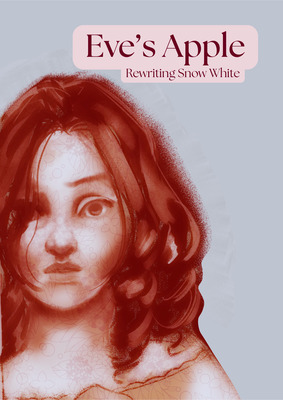
Eve's Apple
Deiadra Elliott
For our final project, we were asked to create or rewrite a fairy tale with a contemporary teenage audience in mind. We had to include gender studies, feminist theory or an approved theory of our own in our work. I chose to rewrite the fairy tale Snow White expanding on the religious themes included in the original work, for a darker, more gruesome tale that teenagers might enjoy. In my research so far, I more about the brothers Grimm and the background surrounding the Grimm's fairy tales. I learned about 19th century Germany, as well as the balance the country held between their Christian faith and pagan ancestry.