High Impact Practices Student Showcase Fall 2025
Welcome to the Fall 2025 Amy Zeh High Impact Practices Student Showcase!
Visit the Main Showcase Page.
Find more information about the showcase.
The projects below formed part of the virtual showcase. See the program for the in-person showcase .
Amy Zeh HIP Course Showcase Fall 2025 Winners
Judges' Choice
Service Learning Winner
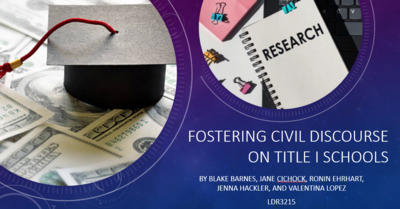
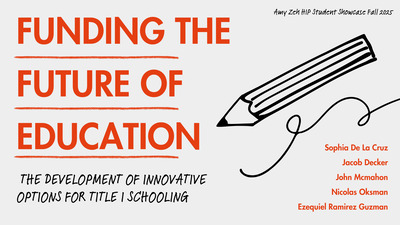
- Sophia de la Cruz, Jacob Decker, John Mcmahon, Nicolas Oksman, Ezekiel Ramirez Guzman, Funding the Future of Education - The Development of Innovative Options for Title I Schooling
- Lauren Fitzsimmons, Ann Reichle, Noshi Kapoor, Sara Wise, Robin O'Meallie, Greg Zboch, Bryce Fable, Change Through Social Media: Sparking Wildlife Conservation One Click at a Time
Service Learning Runner Up
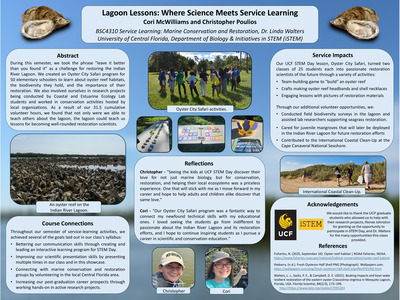
- Cori McWilliams, Christopher Poulios, Lagoon Lessons: Where Science Meets Service-Learning
Service Learning Third Place
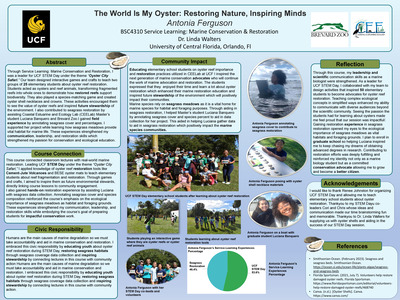
- Antonia Ferguson, The World Is My Oyster: Restoring Nature, Inspiring Minds
- Aashna Shah, Healing with Hope: Expanding Access to All
Service Learning Honorable Mentions
- Valerie Pompee, Thomas Blais, Wendy Davis, Lincoln Lynch, S.O.A.R.: Stomp-powered Orbital Air Rockets
Integrative Learning Experience Winners
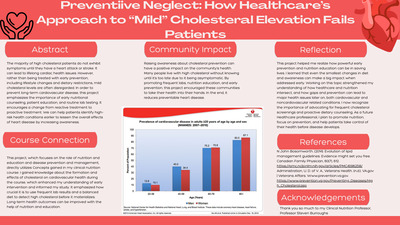
- Sofia Lahsaini, Screening and Risk assessment of Cholesterol (HLD) in healthcare
- Nikko Zamora, Aisha Khurshid, Bailey McLain, Devrim Yalcindag, Michael Ortiz, Home-Based Exercise Program for Recovery After TAVR
Research-Intensive Winner
Student Government Audience Awards (In-Person Event on November 20th)
First Place
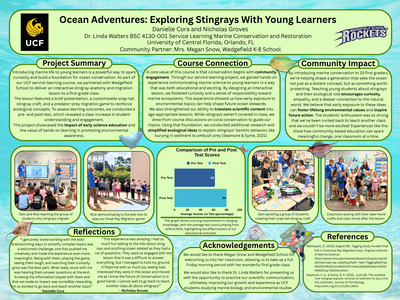
- Nicholas Groves, Danielle Cora (Service Learning), Ocean Adventures: Exploring Stingrays with Young Learners
Runner Up
- Ann Mary Thomas (Research Intensive), East of Anacostia: A Tale of Systemic Inequities and Health Disparities in Washington D.C.
Third Place
- Wade Cornell, Hudson Deppen, Connor Kazmierski, Gilberto Jimenez Perez (Integrative Learning Experience), Trade-off Between Surface Area and Aerodynamic Drag in Solar Electric Vehicle Design
- Sualba Alejandro, Victoria Drovilus, Valerie Block, Angelina Salort-Carrero, Dylan Fox, (Integrative Learning Experience), Intensity-Modulated Pelvic Radiation Therapy in Treating Patients in Endometrial Cancer
Honorable Mentions
- Emily Timotic (Service Learning), From Peers to Partners
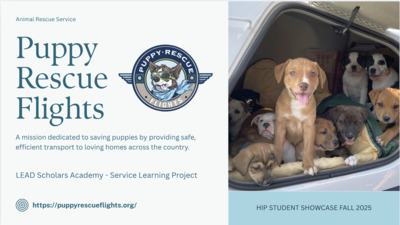
- Angelina Fasolo, Mitchel Woodrow, Sarah Burbank, Thalia Dittman, Michael McKnight, Kayla Buchholz (Service Learning), Paws on Board: Transporting Dogs from Shelters to New Homes
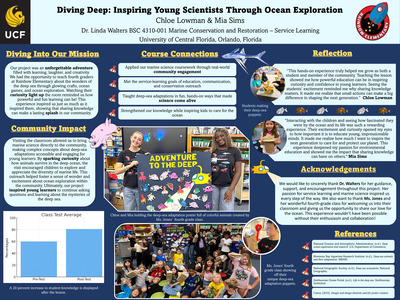
- Chloe Lowman, Mia Sims (Service Learning), Diving Deep: Inspiring Young Scientists Through Ocean Exploration
- Artemis Zi (Research Intensive), The Strength of Association between Elevated Levels of Cholesterol and Mortality of Coronary Heart Disease
- Ryan Baxter, Samantha Maiorino, Leah Lascano (Service Learning), Preserving the Rights and Quality of National Parks Against the Commercialization of Natural Areas
-
S.O.A.R: Stomp-powered Orbital Air Rockets
Valerie Pompee, Wendy Davis, Thomas Blais, and Lincoln Lynch
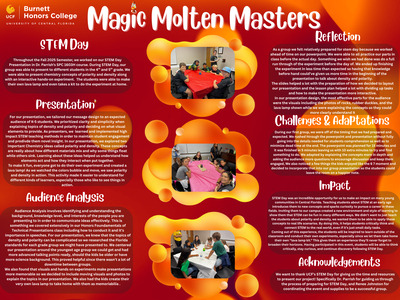
Biannually, UCF hosts STEM Day, where K-12 students engage in interactive displays and presentations on STEM topics. The objective of our project was to use stomp rockets to enable students to apply basic physics forces in a fun, engaging way that aligns with their curriculum. We applied concepts from our Fundamentals of Technical Presentations course, such as audience analysis and tailoring, to make our presentation engaging and memorable for our different audiences.
For our interactive presentation, we started with a quick lesson on drag, lift, and thrust on a rocket. Then, we guided each student group through building their own paper stomp rockets with customizable fin shapes and placements. When they finished construction, they were able to launch their rocket outside and adjust trajectories by changing the launcher’s angle, applying the lessons they recently learned.
From this project, we gained a deeper understanding of the importance of volunteering in our community. As we taught students and witnessed them apply these lessons in real life, we saw the difference it made with their smiles, displays of creativity, and warm gratitude towards our project. Through our time at STEM Day, we could see how making engaging and memorable STEM lessons resonates with young audiences. Our roles as presenter volunteers made a difference in our Florida community.
Overall, our service learning project taught us the importance of community engagement. Beyond simply making memories, we ignited curiosity and creativity in the minds of our future generation of students, highlighting the importance of STEM education.
-
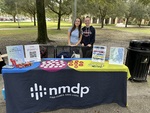
Leading Change, Saving Lives: The Leadership Behind the National Marrow Donor Program
Madison Rhubart and Isabella De Araujo Mota
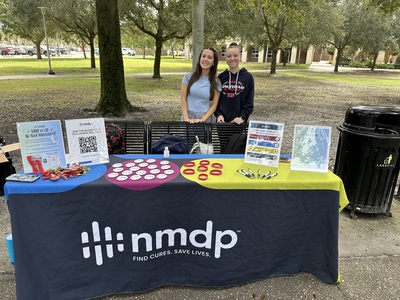
As part of the LEAD Scholar Academy service-learning project, our group partnered with the National Marrow Donor Program (NMDP), a nonprofit organization dedicated to saving lives through cell therapy and bone marrow donation. The purpose of our project was to support NMDP’s mission of expanding the marrow donor registry and to explore how leadership principles can be applied through meaningful community engagement.
Our volunteer work included assembling and labeling swab kits, assisting with donor registration drives, and educating UCF students about the importance of joining the registry. Through these activities, we not only contributed to lifesaving outreach efforts but also gained firsthand insight into how collaboration and civic responsibility strengthen communities.
Throughout this experience, we connected classroom concepts – particularly the Social Change Model of Leadership – to real-world service. We observed how values such as commitment and citizenship are demonstrated through teamwork, advocacy, and consistent effort toward a common goal. Ultimately, this project deepened our understanding of leadership as service, showing that small actions, when combined with shared purpose, can have a lasting and meaningful impact.
-
Impact of ULA’s in an Undergraduate Chemistry Course
Alex Ride, Joel Carvajal, and David Ramos
Bloom’s taxonomy (Benjamin Samuel Bloom, 1956) is a hierarchical framework that is useful for categorizing learning objectives into discrete levels of understanding. This framework has six different discrete levels, becoming increasingly more complex: the original cognitive domain, beginning with Knowledge, Comprehension, Application, Analysis, Synthesis, and the highest level being Evaluation. The goal of this research is to understand how the experience of Undergraduate Learning Assistants (ULAs) in the same general chemistry one course emulates Bloom’s taxonomy, looking at both experiences during the designated class time and outside of it, in the form of office hours or exam reviews. Experiences with students occurred both in person and virtually, and as such, these experiences may be more conducive to certain levels of the taxonomy and deserve to be analyzed separately. The experiences being discussed are the researcher’s own.
-
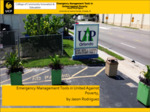
Applying Emergency Management Principals In a Non-Profit Organization
Jason D. Rodriguez
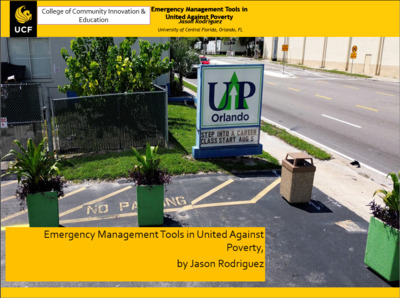
Throughout the experience at United Against Poverty, I am utilizing concepts of emergency management within the management structure that are similar to Incident Command Systems (ICS) and how the organization incorporates emergency management phases like preparedness, mitigation, response, and recovery. Through volunteering in opportunities like front end-bagging, traffic coordinator, sanitizing assistant and marketplace assistant I was able to map similar functions of ICS to their management structure. With the help of staff, I was able to gather how they respond to natural hazards like heavy storms. When these storms occur, they are vulnerable to leaks and floods inside the building. One of the few things I learned in the facility is how important they are to the local community who cannot afford average groceries. This organization gets very busy with clients who sometimes need help putting items in bags and into their cars. The staff at the organization have detailed oriented tasks to ensure that produce and meats are safe to purchase. Lastly, this organization will soon be moving to newer location that will help mitigate against strong storms.
-
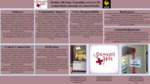
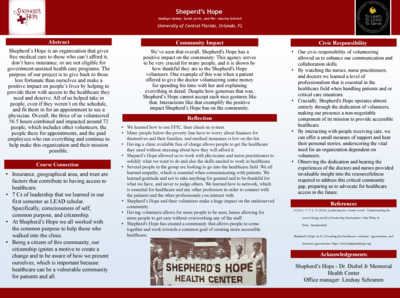
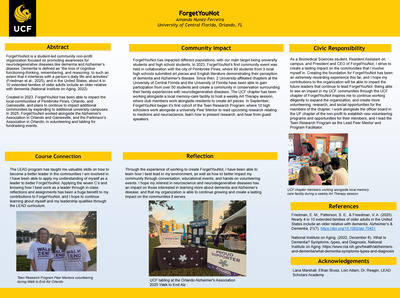
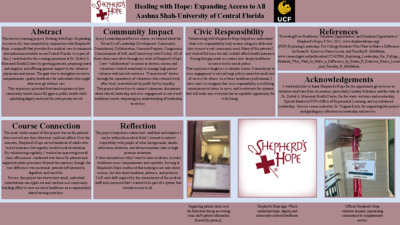
Healing with Hope: Expanding Access to All
Aashna A. Shah
Healing with Hope: Expanding Access to All is a service-learning project completed with Shepherd's Hope, a nonprofit organization that provides free medical care to uninsured and underinsured adults in Central Florida. My work took place at the Dr. Diebel Jr. Memorial Health Center, where I volunteered during evening clinics to greet patients, prepare charts, organize supplies, and assist the volunteer doctors and nurses. The goal of this project was to help improve access to compassionate, high-quality healthcare for individuals who might otherwise go without care.
This experience taught me the power of empathy, teamwork, and leadership. I learned how small acts, such as listening to a patient's concerns or helping to streamline clinic flow, can lastingly affect a person's dignity and trust. Most importantly, this project reiterated my commitment to pursuing medicine as a way to serve others and promote health equity in my community.
-
"Little Minds, Big Imaginations"
Kayla Shreve and Analiese Kuriakose
Our project focused on service-learning through weekly reading sessions at UCF’s Creative School for Children. During our time we visited three age groups: toddlers, pre-k 1, and pre-k 2. We took turns reading aloud, encouraged participation, and built a love for storytelling among young learners. Each week, we selected books from the UCF CMC library and devoted 30 minutes to each class. Over time, we observed growth in the children’s attention span, enthusiasm, and social skills. During one combined session, both pre-k classes eagerly listened to ten books for over an hour and still wanted more reading time. Many students began requesting books and connecting the stories being read to their experiences. Through this, we saw an increased level of comfort and comprehension.
This project connected to our LDR course through principles of servant leadership. In class, we had discussions on The Servant by James C. Hunter. We learned leadership begins with a choice, seen through selecting books, managing time, and adapting to different groups of children. Through patience, discipline, and enthusiasm, we developed confidence in communication skills reflecting servant leadership values. What began as unfamiliar, or conscious-unskilled, turned into a rewarding practice of self-growth and community outreach, or unconscious-skilled.
The most valuable outcome was witnessing how consistent encouragement and genuine engagement influence young children’s development. Their confidence, curiosity, and participation emphasized compassionate leadership and the power of education. This service-learning project strengthened students’ literacy and social abilities and deepened our understanding of how service creates leadership and lifelong learning.
-
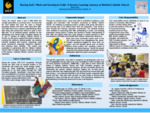
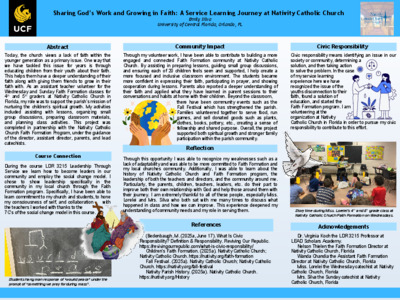
Sharing God's Work and Growing in Faith: A Service Learning Journey at Nativity Catholic Church
Emily Silva
Today, the church views a lack of faith within the younger generation as a primary issue. One way that we have tackled this issue for years is through educating children from their youth about their faith. This helps them have a deeper understanding of their faith along with giving them friends to grow in their faith with. As an assistant teacher volunteer for the Wednesday and Sunday Faith Formation classes for 4th and 5th graders at Nativity Catholic Church in Florida, my role was to support the parish’s mission of nurturing the children's spiritual growth. My activities included assisting with lessons, organizing small group discussions, preparing classroom materials, and planning class activities. Through this I have learned to be more adaptable, committed, and collaborate more efficiently.
-
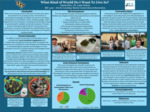
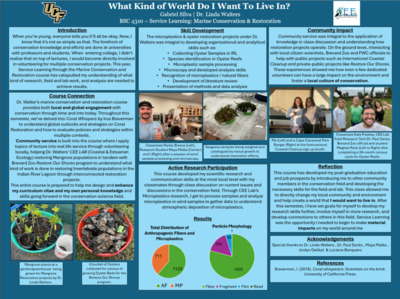
What Kind Of World Do I Want To Live In?
Gabriel T. Silva
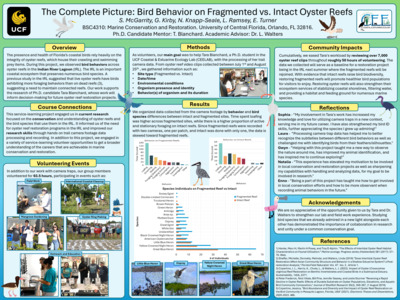
Marine Conservation and Restoration is one of the most influential courses through community engagement and class discussion on conservation and restoration strategies. I had the opportunity to work with Dr. Walters’ CEE (Coastal & Estuarine Ecology) Lab to plant mangroves and census oysters for restoration projects and to contribute to microplastics research based out of the Indian River Lagoon. Through this course, I gained experience that can be utilized in active research and active restoration through hands-on work both in the field and in the laboratory which will strengthen my academic CV and personal skill development. Engagement with the local community through volunteering events such as International Coastal Cleanup and the Restore Our Shores oyster restoration projects also helped me develop a sense of community across a greater range from Central Florida to Coastal and South Florida. This course also distilled a greater sense of hope for the ongoing biodiversity and ecological crisis that the world faces and allowed me to make a more immediate, material impact on the ecosystems we rely on.
-
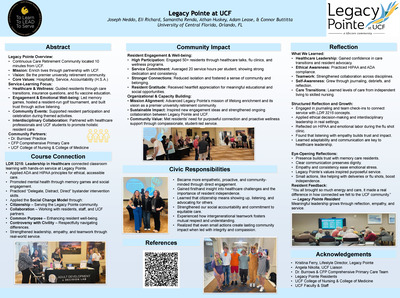
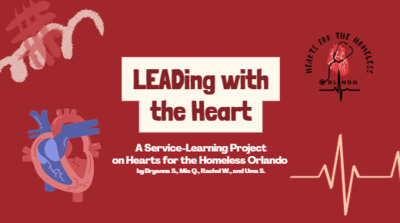
LEADing with the Heart: A Service-Learning Project
Bryanna Sparks, Mia Quinones, Rachel Waldman, and Uma Sreekumar
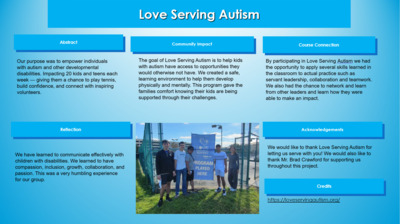
In this service-learning project, for LDR3215, we worked with Hearts for the Homeless Orlando to learn more about their organization for the past semester through volunteer service. Throughout our service experience, we conducted free health screenings for the homeless population of downtown Orlando. These screenings included blood pressure, EKG readings, hearing exams, and vision tests. We were able to grow as leaders and as future health professionals. Over the course of our project, we completed over 60 hours of service
-
Virtual Volunteering Support for the USDA Horticulture Center in South Florida
Nikhita Sridhar
During Fall 2025, I completed 40 hours of virtual service with the USDA Horticulture Center in South Florida. My volunteer work involved simple but essential support tasks, including organizing digital files, entering basic data into spreadsheets, sorting and labeling plant-related photos, and helping prepare materials for outreach activities. Even though the tasks were basic, they directly supported the Center’s research, data organization, and community education programs. This project highlights how small, consistent contributions improve workflow efficiency in agricultural research and help strengthen public outreach efforts.
-

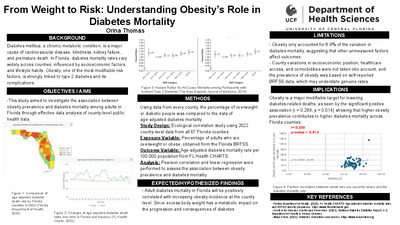
From Weight to Risk: Understanding Obesity’s Role in Diabetes Mortality
Orina V. Thomas
The goal of the study was to look into the potential relationship between obesity and diabetes-related mortality in the state of Florida. Diabetes is a significant chronic illness that has a wide range of effects throughout the state and is linked to major complications and early mortality. Understanding this association is crucial for guiding public health initiatives because obesity is one of the most significant and avoidable risk factors for type 2 diabetes.
To examine this association, I conducted an ecological correlation study using 2022 data from all 67 Florida counties. The Behavioral Risk Factor Surveillance System (BRFSS) was used to get data on obesity prevalence, and Florida Health CHARTS was used to gather data on diabetes mortality rates. I discovered a statistically significant positive link using Pearson correlation and linear regression, indicating that counties with greater obesity rates also tended to have higher diabetes mortality. The results show that obesity had a significant impact on the outcomes of chronic diseases, even if it only partially explained the variation.
During this study, I gained experience organizing and analyzing public health data at the county level, interpreting statistical correlations, and applying epidemiological ideas to actual health inequalities. My comprehension of chronic illness patterns has improved as a result of this experience, which also reaffirmed the significance of preventive measures in public health.
-
Restoring Hope: The Sharing Center
Mario Torres, Lucas Drone, Mariela Medina Rodriguez, James Kapinos, and Avalyn Blakley
As student volunteers at the Distribution Center of The Sharing Center we assisted in several key areas where all community donations are first received. Our responsibilities included sorting incoming donations, placing them into proper departments, and preparing items for the Thrift Store. We handled clothing donations (folding, organizing by age and gender) and helped verify electronics to ensure all battery or power-operated items functioned properly before being distributed.
Through this experience, we gained firsthand insight into how effectively The Sharing Center fulfills its mission of serving individuals and families facing poverty and homelessness through Christ-centered outreach. We witnessed a well-organized system that turns community generosity into tangible help for those in need.
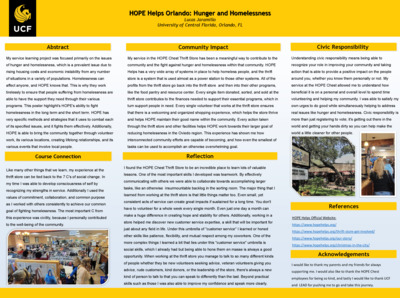
One of the most valuable lessons we learned was the importance of teamwork and shared purpose. Working alongside staff and other volunteers taught us patience, coordination, and problem-solving in a fast-paced environment. Most importantly, connecting with the organization’s mission and the people it serves deepened our understanding of compassion in action. This experience left us with a strong sense of gratitude and purpose, reminding us how collective effort can make a meaningful difference in our community.
-
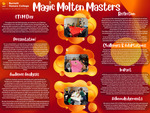
Captivating Chemistry: Luminous Lava Lamps
Linsey Vo, Brinlie Bergman, Kylie Daum, Shayan Noor, and Akshay Aramjisingh
Our group participated in STEM Day, an engaging biannual event that brings together K–12 students to explore the wonders of science, technology, engineering, and mathematics through hands-on experiences. When planning our presentation, we aimed to create an activity that was both visually exciting and easy for students of all ages to understand. We chose to demonstrate the concepts of polarity and density through a fun and interactive experiment in which students created their own lava lamps. This activity allowed the students to observe scientific principles in action while encouraging curiosity and enthusiasm for STEM learning.
-

Saving the Arctic: Learning Through Animals and Art
Sara A. Wieschhorster, Andrea J. Goldfarb, and Linda Walters Dr
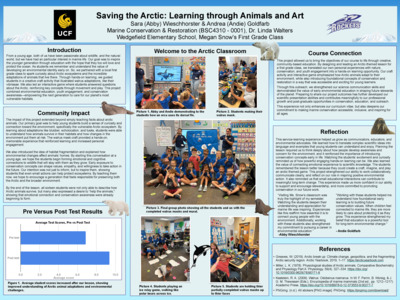
The Arctic is one of the most fragile ecosystems on Earth, and protecting it is vital for our planet’s future. For our service‑learning project, we partnered with Ms. Snow and Wedgefield Elementary to engage her first‑grade classroom in learning about Arctic animals and their adaptations. We introduced a variety of species, highlighting unique adaptations, and reinforced this knowledge through a craft activity where students created walrus masks to take home. Beyond animal adaptations, we discussed habitat fragmentation and encouraged students to take action against environmental threats by planting trees, recycling, and staying informed. Our goal was to spark environmental awareness and help children understand the importance of protecting the Arctic ecosystem. This project aligned with our class theme of conservation and demonstrated how early engagement can inspire future stewardship. Witnessing the students’ excitement reminded us of the power of making science fun and accessible, while also shaping our own career aspirations.
-
Home-Based Exercise Programs for Recovery after TAVR
Nikko Marvin A. Zamora, Bailey Mclain, Devrim Yalcindag, Aisha Khurshid, Michael Ortiz, and Cheryl Cavaliere
The project titled “Home-Based Exercise Program for Recovery After TAVR” focuses on improving recovery outcomes in patients with heart valve disease, specifically those who have undergone Transcatheter Aortic Valve Replacement (TAVR). The purpose of the project was to evaluate the effectiveness of a home-based exercise program, with and without Cognitive Behavioral Intervention (CBI), compared to an educational control program. The study aimed to enhance patients’ physical functionality, quality of life, and recovery time after TAVR—an important consideration for older adults who may not be eligible for open-heart surgery.
Key activities included interpreting a clinical trial. To be able to look at a clinical trial and understand the information given on a professional level is a skill that isn’t acquired so easily. We were able to learn what each category and number meant so we are able to understand the discourse going on between researchers.
One key lesson learned was that recovery from lifestyle changes are achievable even with issues involving heart valves. Another key lesson learned was the value of integrating behavioral support into rehabilitation programs to improve patient motivation and adherence