

High Impact Practices Student Showcase Spring 2026
Files
Download Full Text (10.3 MB)
Course Code
BSC
Course Number
4312C
Faculty/Instructor
Dr. Linda Walters
Faculty/Instructor Email
Abstract, Summary, or Creative Statement
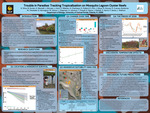
Climate change has caused average temperatures across the globe to increase and the frequency of freezing events in temperate climates to decrease, leading to tropical species moving polewards. This process, known as tropicalization, has been documented on the eastern coast of Florida as the tropical red mangrove (Rhizophora mangle) encroaches into temperate communities once defined by the eastern oyster (Crassostrea virginica). Mosquito Lagoon, located within the Indian River Lagoon (IRL) system, is one community that has experienced an increase of 198% in mangrove coverage on intertidal oyster reefs between 1984 and 2017. Although the frequency of freezes has decreased in recent years due to increased global temperatures, Mosquito Lagoon experienced temperatures ≤ -4°C (the lowest threshold for R. mangle survivability) on 1 February 2026, potentially impacting mangrove population dynamics on these oyster reefs. Our research is part of an ongoing long-term project to monitor mangrove density, distribution, size, herbivory, and the rate of change of these characteristics compared to previous years. This study has been conducted annually each spring since 2023, collecting data across the same 10 reefs within Mosquito Lagoon. Previous results documented a 60% increase in mangrove stand coverage between March 2023 and 2024, following a 32% increase from 2024 to 2025. The historic annual rate of mangrove increase on oyster reefs was 6%, reported from 1984 to 2017. As climate change raises global temperatures, the importance of predicting future ecosystem shifts will grow. By understanding interactions between these foundational species, resource managers will be better equipped to protect the futures of these vital ecosystems.
Keywords
mangroves;oyster reefs;tropicalization;climatechange;estuary;freeze
Recommended Citation
Silva, Gabriel T.; Kurian, Maya; Manzelli, Katherine; Pollard, Kye; Hunt, Johanne; Johnson, Avarey; Cuevas-Gutierrez, Kiara; Harrington, Giavanna; Cherkaoui, Giles; Spara, Anya; Powell, Tai; McLean, Jacob; Chin, Ryan; Milanes, Kriztian; Groves, Nicholas; Theobald, Michael; Moya, Justin; Vance, Melissa; Chapman, Logan; and Delikat, Jordyn, "Trouble in Paradise: Tracking Tropicalization on Mosquito Lagoon Oyster Reefs" (2026). High Impact Practices Student Showcase Spring 2026. 54.
https://stars.library.ucf.edu/hip-2026spring/54
Accessibility Statement
This item was created or digitized prior to April 24, 2027, or is a reproduction of legacy media created before that date. It is preserved in its original, unmodified state specifically for research, reference, or historical recordkeeping. In accordance with the ADA Title II Final Rule, the University Libraries provides accessible versions of archival materials upon request. To request an accommodation for this item, please submit an accessibility request form.