

High Impact Practices Student Showcase Spring 2026
Files
Download Full Text (872 KB)
Course Code
ANT
Course Number
4591
Faculty/Instructor
Professor Sarah Freidline
Faculty/Instructor Email
Abstract, Summary, or Creative Statement
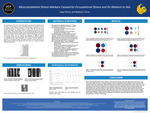
The excavation of the site of San Pedro, Belize, uncovered the skeletal human remains of 46 individuals that were naturally preserved well enough in sand to be studied. These remains belonged to ancient Maya, dating back to the Terminal Postclassic to Historic period (c. 1450–1700 CE), who had been buried under what is now the Sands Hotel. This population was part of a small fishing village. These people likely led a labor-intensive lifestyle, which would lead to the skeletal remains showing signs of Musculoskeletal Stress Markers (MSM). This stems from the theory that the males of this village would carry out harsher tasks such as hunting and engaging in warfare; causing musculoskeletal stress markers (Perego, 2007). Within this sample population, we hypothesize that each individual’s sex correlates with the absence or presence of occupational stress. The skeletal remains of males will have more MSM present, whereas the females will show fewer or no signs of trauma related to harsh labor.
Keywords
Anthropology; Biology; Osteology Sex Estimation; Musculoskeletal Stress Markers
Recommended Citation
Torres, Madison E. and Rohrer, Sage, "Musculoskeletal Stress Markers Caused by Occupational Stress and Its Relation to Sex" (2026). High Impact Practices Student Showcase Spring 2026. 62.
https://stars.library.ucf.edu/hip-2026spring/62
Accessibility Statement
This item was created or digitized prior to April 24, 2027, or is a reproduction of legacy media created before that date. It is preserved in its original, unmodified state specifically for research, reference, or historical recordkeeping. In accordance with the ADA Title II Final Rule, the University Libraries provides accessible versions of archival materials upon request. To request an accommodation for this item, please submit an accessibility request form.