

High Impact Practices Student Showcase Spring 2026
Loading...
Files
Download Full Text (22.3 MB)
Course Code
LAS
Course Number
3142
Faculty/Instructor
Valerie Man-Grosso
Faculty/Instructor Email
Abstract, Summary, or Creative Statement
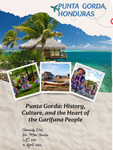
Along the northern coast of Honduras, where the Caribbean Sea meets lush tropical landscapes, lies the village of Punta Gorda, a place where history, culture, and identity intertwine. Known as one of the earliest Garifuna settlements in Central America, Punta Gorda is more than just a village; it is a living testament to resilience and heritage. The Garifuna people, descendants of West African, Indigenous Caribbean, and Arawak ancestries, arrived on these shores in the late 18th century after being exiled from St. Vincent and the Grenadines, bringing with them a rich cultural legacy that continues to thrive today.
In Punta Gorda, history is not confined to the past; it is woven into everyday life. The rhythms of traditional drumming echo through the village, accompanying dances and songs that preserve stories of survival and community. The Garifuna language, food, and spiritual practices remain central to daily life, reflecting a deep connection to both land and ancestry.
Despite challenges brought by modernization and economic pressures, Punta Gorda stands as a cultural stronghold. It represents the enduring spirit of the Garifuna people, a community that has preserved its identity through centuries of displacement and change. Ultimately, Punta Gorda is not just a geographic location, but the heart of a people whose history and culture continue to shape their present and inspire their future.
Keywords
Latin America, Garífuna, African Diaspora, Diaspora, Colonization
Recommended Citation
Diaz, Chassidy, "Punta Gorda, Honduras: History, Culture, and the Heart of the Garifuna People" (2026). High Impact Practices Student Showcase Spring 2026. 71.
https://stars.library.ucf.edu/hip-2026spring/71
Accessibility Statement
This item was created or digitized prior to April 24, 2027, or is a reproduction of legacy media created before that date. It is preserved in its original, unmodified state specifically for research, reference, or historical recordkeeping. In accordance with the ADA Title II Final Rule, the University Libraries provides accessible versions of archival materials upon request. To request an accommodation for this item, please submit an accessibility request form.