High Impact Practices Student Showcase Spring 2026
Welcome to the Spring 2026 Amy Zeh High Impact Practices Student Showcase!
Visit the Main Showcase Page.
Find more information about the showcase.
The projects below formed part of the virtual showcase. See the program for the in-person showcase .
Amy Zeh HIP Course Showcase Spring 2026 Winners
Sponsored by UCF’s Student Government
Judges' Choice Winners from the Virtual Event
1st Place
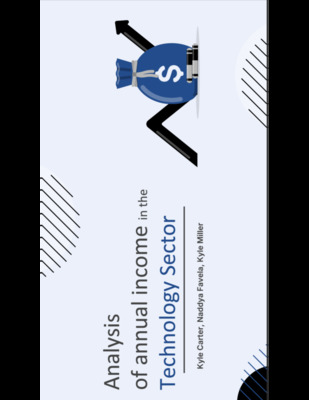
- Kyle Miller, Kyle Carter, Naddya Favela (Research Intensive), Analysis of Workplace Attributes on Annual Income in the Technology Sector
2nd Place
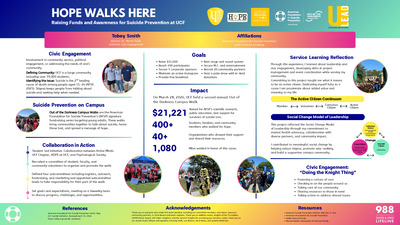
- Tobey Smith (Service-Learning), Hope Walks Here: Raising Funds and Awareness for Suicide Prevention at UCF
3rd Place
- Shayna Caddell, Lucia Hernandez, Correna Bartow, Jonathan Lungstrum, Kevin Wechsler (Service-Learning), Harvesting Hope in Central Florida with Second Harvest Food Bank
Honorable Mentions
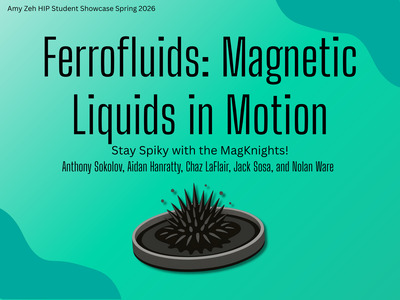
- Nolan Ware, Jack Sosa, Chaz LaFlair, Anthony Sokolov, Aidan Hanratty (Service-Learning), Ferrofluids: Magnetic Liquids in Motion
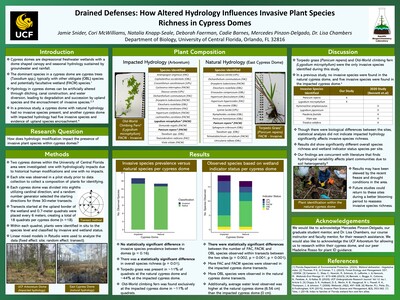
- Jamie Snider, Cori McWilliams, Natalia Knapp-Seale, Deborah Faerman (Research Intensive), Drained Defenses: How Altered Hydrology Influences Invasive Plant Species Richness in Cypress Domes
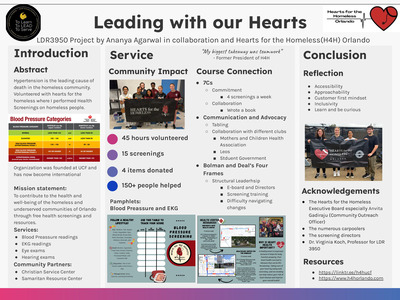
- Gianna Marzullo, Haydn Bonner, Kristina Puscher, Anna Mullins, Gabriella Echeverria, (Service-Learning), Small Acts, Big Impacts: Supporting Hearts for the Homeless
- Isabella Anderson, Jenny Tran, Mia Bukritsky, Kaito Powell, Madison Renda, (Research Intensive), AI Usage and Student Performance
- Yara Elrebey, Keoni Tembrina (Integrative-Learning Experience), Diagnosing Understanding: A clinical approach to teaching general chemistry
Audience Awards from the In-Person Event on April 22, 2026
Grand Prize
- Tara Haubrich, Giavanna Harrington, Jessie Shaffer, Maddison Magyar, Caroline Figueroa (Research Intensive), What the Shell? The Effects of Anthropogenic Wetland Modification on Freshwater Turtle Communities
1st Place
- Danielle Haddox, Katherine Schofield, Ondraya Moore, Nicholas Delatour (Research Intensive), Generational exposure to social media in relation to world events
2nd Place
- Madelyn Moyers, Isabela Rocha, Madison Figueiredo, Sophia Rivera (Service Learning), Jordon Smelski Foundation Pitch
3rd Place
- Terry Dinh, Zhi Lin (Integrative-Learning Experience), Analysis of VO2 & Resting Metabolic Rate assessment for Patient Centered-Care
Honorable Mentions
- Christopher Mayol, Brian Nguyen, Kai Djuren (Global Learning), The Impact of Gaming on Youth
- Avarey Johnson, Tai Powell, Rachel Flis, Rhees Henderson, Enno Turner (Research Intensive), Scute City: Impact of Urbanization on Body Condition of Kinosternon baurii in Central Florida
- Cami Dobson, Addyson Jones, Alexandra Boveil, Giovanni Gioia (Service-Learning), Battling Human Trafficking: How Social Media Advertising Influences Awareness
- Misty Zamora, Juan Sanchez, Geanluka Guedes de Souza, Leah Darby (Service-Learning), Advocating for Amoeba Awareness: The Jordan Smelski Foundation Media Project
-
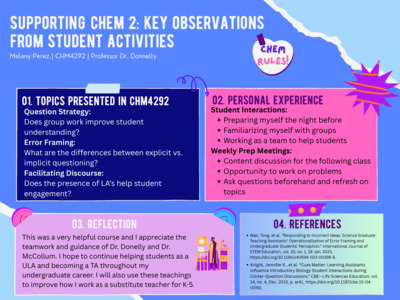
Diagnosing Understanding: A clinical approach to teaching general chemistry
Yara S. Elrebey and Keoni Tembrina
This project explores a clinical approach to teaching and learning in a General Chemistry I classroom by framing student interactions through the structure of a medical visit. As learning assistants in a flipped classroom, we aimed to move beyond simply providing answers and instead diagnose the root of students’ misunderstandings using pedagogical techniques such as guided questioning, peer discussion, and addressing misconceptions.
Key activities included facilitating small-group problem solving, prompting students to explain their reasoning, and applying a structured framework consisting of “subjective” (gathering student concerns), “objective” (observing understanding), “diagnosis” (identifying conceptual gaps or misconceptions), “treatment” (guiding learning), and “follow-up” (ensuring transfer of knowledge).
-

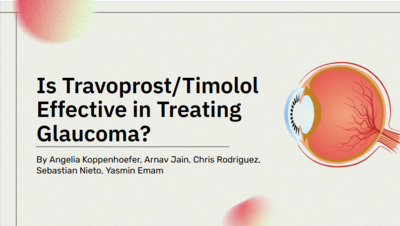
The Efficacy of Travoprost/Timolol in Treating Glaucoma
Yasmin Emam, Sebastian Nieto, Arnav Jain, Chris Rodriguez, and Angelia Koppenhoefer
This project focuses on evaluating the effectiveness of DuoTrav, a fixed-combination ophthalmic medication containing Travoprost 0.004% and Timolol 0.5%, in the treatment of open-angle glaucoma and ocular hypertension. The purpose of the researcher's study was to examine how this combination therapy compares to a beta-blocker monotherapy in reducing intraocular pressure (IOP), which is a major risk factor for optic nerve damage and vision loss in glaucoma patients.
Key activities included reviewing the cause of glaucoma, analyzing the design and results of a completed and randomized clinical trial, and applying the findings to clinical practice.
One of the most important things we learned was the significant clinical impact of lowering IOP, especially how even small reductions can greatly decrease the risk of glaucoma progression. We also learned the importance of translating research findings into patient care by considering treatment effectiveness, appropriate dosage, monitoring protocols, side effects, and patient adherence when applying evidence to clinical implementation.
-
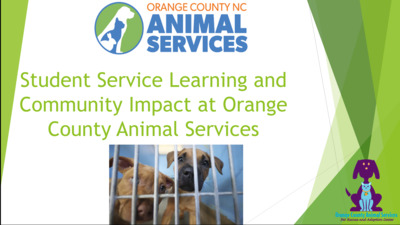
Student Service Learning and Community Impact at Orange County Animal Services
Andres E. Enriquez, Matthew Cuenca, Franklin Chen, Camila Montesano Rojas, Rodney Farinas, and Youle Wang
Our project focused primarily on volunteering at Orange County Animal Shelter. The purpose of our project was to learn more about leadership skills through in-person service, teamwork, and community engagement. We worked directly with the shelter staff and animals and aimed at better understanding the responsibility needed and the impact we had on serving others.
Some of the key activities that we did were that we helped the shelter with daily operations, which included cleaning animal enclosures, organizing supplies, and interacting with animals to improve their socialization. We also helped maintain a warm, welcoming environment for the visitors and animals.
One thing that we learned was the importance of adaptability, as each day we were faced with new challenges, and we had to adjust while keeping a positive attitude as we worked with a variety of different people. Another major takeaway was that leadership is more than just directing others but also includes serving, supporting others, and setting examples through actions. This project helped all of us grow as leaders through contributing to our community.
-
Predicting Alzheimer’s Disease Diagnosis Using Cognitive, Lifestyle, and Medical Factors: A Logistic Regression Approach
Lilly Fattizzi and Josephine Schumacher
This study examines how well cognitive performance and lifestyle/health factors predict Alzheimer’s disease diagnosis using a logistic regression framework. The dataset, obtained from Kaggle, consists of 2,149 individuals and includes demographic, cognitive, and medical variables. Key predictors of interest include Mini-Mental State Examination (MMSE) score, memory complaints, body mass index (BMI), age, depression, and hypertension. Exploratory data analysis revealed that individuals diagnosed with Alzheimer’s disease had substantially lower MMSE scores and higher rates of memory complaints compared to those without a diagnosis. A logistic regression model was fit, and stepwise selection based on Akaike Information Criterion (AIC) was used to identify the most important predictors, with the final model including MMSE, memory complaints, and hypertension. Results indicated that higher MMSE scores were associated with decreased odds of Alzheimer’s disease, while memory complaints significantly increased the likelihood of diagnosis. Model performance was evaluated using a receiver operating characteristic (ROC) curve, yielding an area under the curve (AUC) of 0.7189, indicating moderate predictive ability. Overall, cognitive variables were the strongest predictors of Alzheimer’s disease diagnosis, underscoring the importance of cognitive screening measures for early detection.
-
The Strength of the Association Between Obesity and Mortality from Diabetes Among Adults in Florida
Diego A. Garcia; Jacob Bleasdale PHD,MS,CHES; and Cristobal Cintron MSc, DrPH
Background: Diabetes mellitus is a leading cause of preventable death across the United States, with obesity being directly tied to this condition as one of its most significant and modifiable risk factors. Although national-level evidence strongly supports this association, Florida-specific population data is still limited.
Methods: County-level adult obesity prevalence and age-adjusted diabetes mortality data were obtained directly from the Florida Health CHARTS website (FL DOH,2024) for all Florida counties. The Pearson correlation (r) was used to evaluate the strength of association between the variables
Results: A statistically significant, moderate-positive correlation was found between adult obesity rates and diabetes mortality rates across Florida counties (r=0.610,p< 0.05), meaning that of all the factors that could explain the variation between diabetes mortality rates from county to county across all of Florida, obesity prevalence accounted for 37% of that variation. . Two of three analytical studies further supported this association.
Conclusion: Obesity is significantly associated with diabetes mortality at the population level in Florida. Given the limited access to Florida-specific data, these findings provide the groundwork for future longitudinal research and public health intervention aimed at reducing diabetes mortality across the state.
-
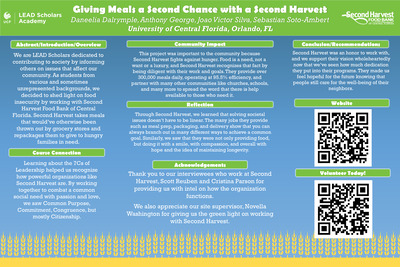
Giving Meals a Second Chance with a Second Harvest
Anthony George, Dani Dalrymple, Sebastian Soto-Ambert, and Joao Victor-Silva
Firstly, we seek to bring attention to the issue of hunger (especially within our local community). Then, we analyze Second Harvest's mission statement, roles for volunteers, and espoused/enacted values (in relation to the social change model). By this, we hope to advocate for Second Harvest as a community that does what it says it does. At the end of the day, Second Harvest does fulfill its purpose in powerful ways. We offered some ways the organization could improve, then lobby for people to get involved in any way they can in the war against hunger. This issue is important to us all.
-
Who's a Good Kid? Perceived Parenting Practices & Altruism
Brianna Guinigundo, Aajonna St.John, Katherine Pospichal, and Sebastian Gonzalez
This semester-long research project was for our HIP Research-Intensive course, PSY 4215C: Advanced Research Methods in Psychology with Dr. William Volante. Throughout this course, we learned how to do various statistical analyses and how to interpret the findings. We put our learnings from the classroom into real-life practice as we learned how to conduct an original research study. The purpose of this research was to evaluate the correlation, if any, between perceived parenting styles and altruism scores among UCF students. Our independent variable means how an individual believes their relationship with their parent to be, classified as one of the following four parenting styles depending on parental control and responsiveness: negligent, permissive, authoritarian, and authoritative. Altruism means the frequency of behaviors one performs to help others. We hypothesized that the authoritative parenting group would have the highest levels of altruism, followed by permissive, authoritarian, and neglectful. Our methodology included an online Qualtrics survey featuring the Parenting Style Scale and The Self-Report Altruism Scale. Survey results were analyzed using a correlation coefficient and an ANOVA. Our results reveal no significant difference between perceived parenting styles and altruism scores, but there was a significant positive relationship between parental control and altruism scores. The implications for this study include supporting family therapy practices and improving one’s home life, fostering a helping community overall. We learned how to write this research into a full-length APA paper and to disseminate our research to the general public by creating a research poster and this video presentation.
-
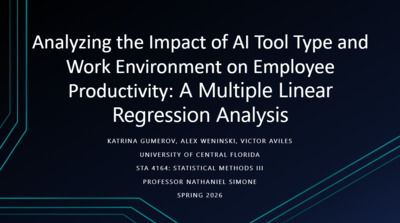
Analyzing the Impact of AI Tool Type and Work Environment on Employee Productivity: A Multiple Linear Regression Analysis
Katrina Gumerov, Alex Weninski, and Victor Aviles
An assessment has been conducted to see how much AI tools and workplace conditions affect productivity using a multiple linear regression approach. This project looked at how different kinds of AI tools affect performance, as well as other things like commute time to work, employee well-being, and hours worked. The dataset was cleaned and restructured, and then the various AI tools were grouped into meaningful categories. After grouping the tools, an exploratory data analysis was conducted to look for trends. Finally, models were developed using multiple linear regression. For model selection, forward, backward, and stepwise model selection methods were used to identify the best-fitting model based on the AIC; all three resulted in the same model. The analysis showed evidence that both technology and human-related causes can impact productivity. Good examples of this are high-impact AI tools (particularly on coding and design), which have a positive impact on productivity and commute time, which is the greatest negative contributor to productivity. A key outcome of this study is that not all AI tools will provide the same level of benefit to the user, and therefore need to be carefully selected based on the user's task. In addition, this project also showed how important it is for an employee to have well-being at work in order to be productive. Overall, the conclusion is that in order for an employee to achieve maximum productivity, a balance between using effective AI tools and having a workplace that is conducive to their well-being.
-
Scribbles to Script
Leslye Hardnack, Island Hebel-Hoover, Conner Smith, and Stephanie Sanchez
This service-learning project takes a deep dive into the Smithsonian Transcription Center, an online platform where volunteers can help transcribe and revive old documents. Analyzed are the organizations values, mission, vision, and follow through to see if they are truly doing what they set out to peruse. We will explain the process of transcribing these documents, how the Smithsonian displays leadership styles, what of the 7 c's of social change they exhibit, and how our group was able to make an impact.
-
Artists on Instagram: the Relationship Between Rhetors, Multimodality, and User Engagement
Keyshonna F. Haywood
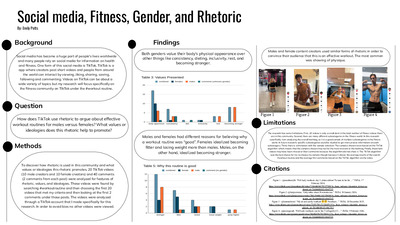
The main purpose of my project was to understand how artists leverage rhetoric and multimodality to market their work to audiences. While aiming to understand how marketing looks in the social media setting, I investigated multimodal elements used by artists on Instagram using multimodal rhetorical analysis. I later coded my data in tables in Google Sheets. My findings highlighted the benefits of visual and interactive elements in engaging audiences, the effectiveness of the pathos and ethos appeals, and how artists can benefit from user support and criticism. Through this process, I learned how to read and write an IMRAD article which will continue to benefit me as a college student and researcher. Furthermore, I learned how to structure my methods, conduct primary research, write a literature review, and connect my findings back to my secondary sources in the context of an existing conversation among other researchers.
-
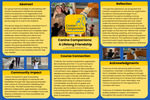
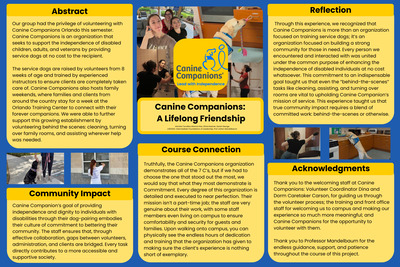
Canine Companions: A Lifelong Friendship
Brenna D. Hiss, Olivia S. Kestner, Sarah M. George, and Alondra I. Torralba
Our group had the privilege of volunteering with Canine Companions Orlando this semester. Canine Companions is an organization that seeks to support the independence of disabled children, adults, and veterans by providing service dogs at no cost to the recipient. We were able to further support this growing establishment by volunteering behind the scenes: cleaning, turning over family rooms, and assisting wherever help was needed. Through this experience, we recognized that Canine Companions is more than an organization focused on training service dogs; it’s an organization focused on building a strong community for those in need. This commitment to an indispensable goal taught us that even the “behind-the-scenes” tasks like cleaning, assisting, and turning over rooms are vital to upholding Canine Companion’s mission of service. Additionally, we learned that through effective collaboration, gaps between volunteers, administration, and clients are bridged. Every task can directly contribute to a more accessible and supportive society.
-
The Significant Factors of Stress
Ava Mee-Lin Hopper, Adam Bryce Wheeler, Moises Arias, and Dylan Kuneman
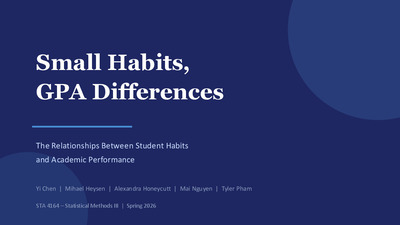
The research provided in this report is based off a dataset about the factors of stress with students. The purpose of this was to see what students can do to best minimize their stress. This process was done using the full nine step regression process. We found that peer pressure, academic pressure at home, and academic competition increase stress levels, and those were the only useful factors.
-
Beyond the Classroom: Advancing Literacy and Community Impact Through YAY Literacy and LDR 2002
Jeanella Jacotin, Junika Octa, Alejandra Pena, Giuseppe Riccobono, and Sangrae Kim
This service-learning project partnered with YAY Literacy Inc., a 501(c)(3) nonprofit dedicated to empowering underserved communities through literacy and life skills education. The primary objective of this project was to address literacy gaps by developing engaging and accessible educational content for students across multiple grade levels. Over the course of the project, our team created 15 presentations covering key topics such as reading literacy, financial literacy, life skills, mathematics, and artificial intelligence, all designed to promote real-world application and long-term student success.
In addition to content creation, the team collaborated virtually to ensure consistency and quality across all materials, while also participating in in-person initiatives, including financial literacy and financial aid workshops for elementary and high school students. A culture audit revealed strong alignment between our group and the organization’s core values, including service, education, teamwork, and community impact. Key course concepts, such as the Three C’s: commitment, collaboration, and citizenship, were consistently demonstrated throughout the project.
The project produced measurable outcomes, reaching over 2,000 students, with an average worksheet performance score of 94% and high levels of student motivation and engagement. These results highlight the effectiveness of structured, real-world learning tools in improving student understanding. Overall, this experience reinforced the importance of service-learning as a means of creating meaningful community impact while developing critical professional and leadership skills.
-
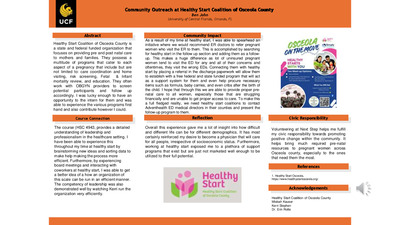
Community Outreach at Healthy Start Coalition of Osceola County
Ben John
The Healthy Start Coalition of Osceola County (HSCOC) is a state and federally funded non-profit organization dedicated to providing comprehensive prenatal and postnatal care to mothers and families. This abstract details a professional internship focused on enhancing community outreach and systemic efficiency. HSCOC manages diverse programs, including care coordination, home visiting, risk screening, and Fetal and Infant Mortality Review (FIMR), working closely with regional OBGYN providers to identify and support at-risk participants through evidence-based interventions.
A central component of this internship involved addressing a critical gap in the local system of care: the tendency for uninsured pregnant women to utilize Emergency Departments (EDs) for primary health concerns. To mitigate this issue, an initiative was spearheaded to implement formal, automated referrals within ED discharge paperwork. By instructing clinicians to utilize electronic health record (EHR) search functions for "Healthy Start" in the follow-up section, the program ensures an immediate connection to a support system that provides both medical guidance and essential physical supplies like formula and cribs. To scale this impact, strategic outreach to ED medical directors at major institutions, such as AdventHealth, is recommended to institutionalize these follow-up protocols.
Aligned with the course "Leadership and Professionalism in Healthcare" (HSC 4943), the experience involved data-driven process improvements and observation of executive organizational leadership. The internship provided profound insights into the socioeconomic barriers facing diverse demographics, reinforcing a commitment to equitable healthcare. Ultimately, the project demonstrated that bridging the gap between existing public resources and vulnerable populations is essential for improving community health outcomes and informing a more compassionate future medical practice.
-
Experiences in Undergraduate Learning Assistance
Gianna M. Johnson
This presentation exemplifies the benefits of learning to be a ULA at the University of Central Florida.
-

The Impact of Artificial Intelligence on Student Learning Outcomes
Aubrey A. Jung
This study examines factors that predict the perceived impact of artificial intelligence tool usage on academic grades among Indian college students. Using a dataset of 3614 Google Forms survey responses collected in May 2025 (Kapilavayi, 2025), a multiple linear regression model was developed with Impact_on_Grades (-5 to +5) as the response variable. After exploratory data analysis, model diagnostics, and model selection procedure, the final model retained the variables: Do_Professors_Allow_Use, AI_Tools_Used, Trust_in_AI_Tools, Preferred_AI_Tool, Daily_Usage_Hours, and the interaction term Daily_Usage_Hours x Do_Professors_Allow_Use. The final model was statistically significant with F - 4.578 and p = 1.225 x 10^-9, also having an adjusted R^2 of .017 and a mean absolute error of 1.97 grade impact points. Results suggest that professor approval of AI use, the tools used, and usage intensity are the strongest predictors of reported academic outcome. Limitations of this study include the discrete and self-reported nature of the response variable, as well as the observational study design.
-
Green Light: Using Logistic Regression to Predict When a Stolen Base Attempt Will Succeed
Julio D. Karruli
This project aims to predict the probability of a stolen base attempt of second base in the 2023 Major League Baseball (MLB) season using Logistic Regression. Using play-by-play event data from Retrosheet and player/pitch tracking data from Baseball Savant's Statcast system, this research investigates 2,800 stolen base attempts of second base with a baserunner only on first base to decide which factors are most important to a successful steal of second base using characteristics such as sprint speed, pop time, distance of lead, and pitch metrics. The objective of this research is to aid MLB coaches and front offices in evaluating baserunning ability that goes beyond traditional scouting methods. Additionally, given the game situation, for example, run differential and inning, we can optimize when a stolen base is most effective and necessary, compared to when it is a poor choice. Model selection was performed by using backward selection and the Akaike Information Criterion (AIC) as our selection criterion. We will evaluate the final model by using accuracy metrics such as sensitivity and specificity, as well as building a Receiver Operating Characteristic (ROC) curve and analyzing the Area Under the Curve (AUC) to assess predictive accuracy.
-
The Cultural Audit of Save A Life Pet Rescue
Katerina A. Kring, Andres Torres, Alex Amato, Luisa Barioni Lanez, Selah Pearl, and Aaron Hembree
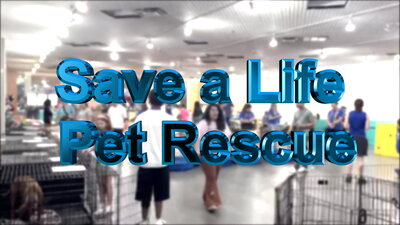
We are conducting a Culture Audit on Save A Life Pet Rescue, an animal rights organization that focuses on helping dogs and puppies in the Oviedo and Orlando areas. Save a Life conducts weekly adoption events on Fridays and Saturdays at the Oviedo Mall, where prospective adopters have the opportunity to interact with and adopt a rescued dog. Save A Life Pet Rescue proudly states that their mission is to “save and enrich the lives of dogs… that have suffered from neglect, cruelty, abandonment, or overpopulation.” Through fostering, adoption programs, dedicated volunteers, and strong community support, Save A Life Pet Rescue envisions a future where every dog is valued, protected, and loved.
The presentation can be viewed at https://ucf-my.sharepoint.com/personal/ka128888_ucf_edu/_layouts/15/stream.aspx?id=%2Fpersonal%2Fka128888%5Fucf%5Fedu%2FDocuments%2FAttachments%2FCaption%5Fvideo%5Fproject%20%281%29%2Emp4&ct=1776442980029&or=OWA%2DNT%2DMail&cid=926ccd92%2Dcd9a%2Dedaf%2Dff63%2Da32f9da1af64&ga=1&LOF=1&referrer=StreamWebApp%2EWeb&referrerScenario=AddressBarCopied%2Eview%2Ea52b466e%2D5b86%2D4907%2Dae81%2Ddb9213b0fa3d
-
Variations in Dissolved Oxygen Across Vegetation Zones in a Freshwater Marsh
Stephanie N. Lievano, Aliah Wales Miller, Marissa Pratt, and Anya Spara
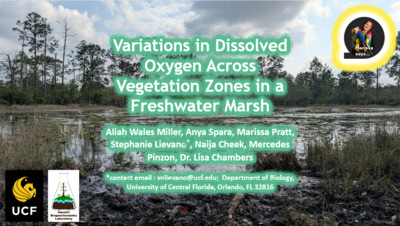
Dissolved oxygen (DO) concentrations are critical indicators of aquatic ecosystem health, yet these levels fluctuate significantly based on the structural and physiological characteristics of dominant vegetation. This study investigated the extent to which DO levels differ among wetland zones dominated by submerged aquatic vegetation (SAV), emergent plants, or floating plant cover. It was hypothesized that SAV-dominated areas would exhibit higher DO concentrations than emergent zones due to the direct release of photosynthetic oxygen into the water column. Data were collected across three diel blocks—morning, afternoon, and evening—in a UCF freshwater marsh using a YSI multiparameter sonde to measure DO, temperature, pH, chlorophyll-a, and phycocyanin across the three vegetation zones. Preliminary findings indicated a distinct DO diel pattern across all habitats, with DO minima consistently recorded during morning sampling. Emergent zones exhibited the most severe hypoxia and the highest pigment concentrations, with chlorophyll-a reaching 142.05 𝜇𝑔/𝐿 and phycocyanin 25.0 𝜇𝑔/𝐿 .These elevated levels correlated with pronounced morning oxygen deficits in emergent and floating habitats. Conversely, SAV zones supported higher sustained DO levels, frequently exceeding 6.0 mg/L in the afternoon, likely aided by lower algal concentrations and direct aeration. These results suggest that vegetation type and algal composition interact to influence water column oxygenation, which is essential for effective water quality monitoring and management of freshwater marsh habitats.
The presentation can be viewed at Virtual Presentation Wetland Plants.mp4 - Google Drive or https://ucf-my.sharepoint.com/personal/st254439_ucf_edu/_layouts/15/stream.aspx?id=%2Fpersonal%2Fst254439%5Fucf%5Fedu%2FDocuments%2FVirtual%20Presentation%20Wetland%20Plants%2Emp4&referrer=StreamWebApp%2EWeb&referrerScenario=AddressBarCopied%2Eview%2Eb1f18c5a%2D6c03%2D42d9%2D85a4%2D3ee532b705de&ct=1776894335409&or=OWA%2DNT%2DMail&cid=3e6dc02e%2D01ba%2D375b%2D740c%2D5638b67c432e&ga=1&LOF=1
-
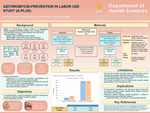
Analysis of Azithromycin-Prevention in Labor Use Study
Emily Martinez, Roldine Questel, Willow Baldwin, and Emma Coffman
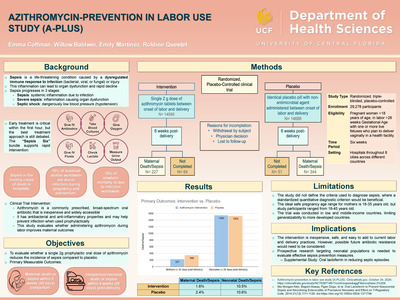
This group project was developed for the Health Sciences Seminar course. The purpose of this project was to analyze a clinical trial which evaluated the effectiveness of azithromycin in preventing pregnancy-related maternal sepsis or death. Azithromycin is a commonly prescribed, broad-spectrum oral antibiotic that is inexpensive and widely accessible; It has antibacterial and anti-inflammatory properties and may help prevent infection when used prophylactically. The study’s primary measurable outcomes were instances of maternal and neonatal death or sepsis within 6 weeks (42 days) postpartum. Based on the results, azithromycin was effective in preventing instances of sepsis maternally, but not within neonates. We believe that the intervention is inexpensive, safe, and easy to add to current labor and delivery practices. However, prospective research targeting neonatal populations is recommended to further evaluate effective sepsis prevention measures.
-

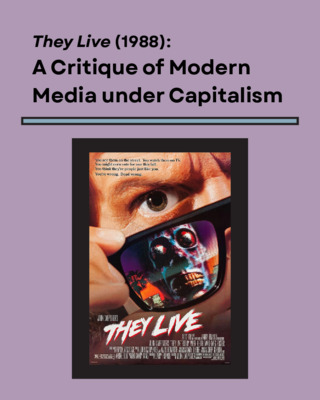
Critique of Modern Media under Capitalism: 'They Live' (1988)
Jade R. McCobb-Pratt
This project presents an analysis of the 1988 John Carpenter film 'They Live'. I explain that the film responds to the modern world in an original way by presenting a bold critique of the way new technologies and mass media are controlled by capitalist structures.
The film, I argue, stands as a critique of the neoliberal ideologies that were common at the time and continue today through productivity culture on social media, for example. I trace the ideas found in neoliberalism back to the concept of the "protestant work ethic" presented by Max Weber and use Weber's work to analyze the world depicted in 'They Live'. Additionally, I analyze film through a Marxist lens, particularly how it depicts class consciousness and revolutionary thinking.
Furthermore, I use the work of Jean Baudrillard to analyze the role of media and technology in 'They Live'. The dystopian world is one in which people are surrounded by constant stimulation and media, such that everything has lost its meaning and reality is indistinguishable from simulation. The world depicted in the film is meant to mirror our reality, and this critique only becomes more applicable with the expansion of media and technology.
Finally, I examine 'They Live' as a piece of media, one that is limited by its own production, genre, and problematic source material. Still, the film stands out in its bold message and refusal to dilute its themes for the sake of mass appeal.
-
From Screen to Science: Advancing Research Through Digital Volunteering
Richard J. McMullan, Cam'ryn Williamson, Jace Pereira, Sanya Kakkar, and Katlyn Taylor
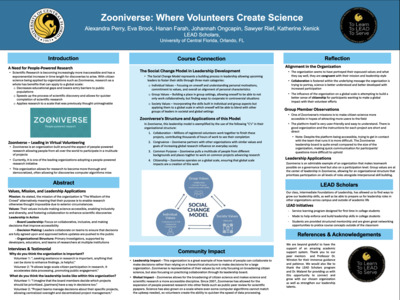
The purpose of this project was to contribute to real-world research by being a part of a large community and engaging with specific organizations. We helped classify images, data, and focused on key topics such as environmental conversation and scientific discoveries. Zooniverse made it extremely accessible to finish projects and analyze data in a short amount of time. better understand wildlife populations and ecological changes.
Key activities included identifying certain animals/plants, reviewing images in space, and exploring new species I hadn't know about before. Zooniverse helped me gain many skills, such as paying more attention to detail and consistency. One key thing our group learned was the importance of contributing to the scientific community and helping in certain research projects. Zooniverse is a way to engage within our community, and help us gain more knowledge about wildfire and our ecosystem.
Overall, this experience showed me how effective it can be to be a part of Zooniverse and make a big impact on the scientific community
-
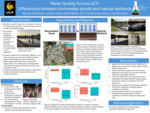
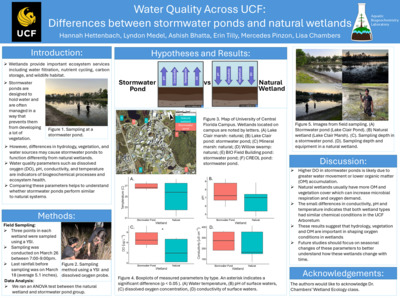
Water Quality Across UCF, Differences Between Constructed, Natural, and Hydrologically Impacted Wetlands
Lyndon R. Medel and Hannah Hettenbach
Wetlands are important as they provide a variety of ecosystem services, including flood protection, habitat, carbon storage, and water quality improvement. Stormwater ponds may perform different functions and have different features than natural wetlands. This study aimed to determine if there are significant differences in dissolved oxygen, pH, conductivity, and temperature between natural wetlands and stormwater ponds. Three natural wetlands and three stormwater ponds were tested across the UCF campus. A YSI and dissolved oxygen probe were used to test three points in each site on March 26 between 7:00pm and 9:00pm. Each parameter, as well as air temperature and the last rainfall event were noted. The mean was calculated for each dissolved oxygen, pH, conductivity, and temperature for natural wetlands and stormwater ponds. The mean for each parameter was higher in the stormwater pond group than in the natural wetland group. ANOVA tests showed no significant differences in pH, conductivity, or temperature between the natural wetland group and stormwater pond group. There was a significant difference in dissolved oxygen between the two groups (p=0.009). This difference in dissolved oxygen levels suggests that manmade systems do differ in the amount of dissolved oxygen in the water. The data suggest that these differences are likely due to differences in organic matter, vegetation, and water level. Overall, differences in dissolved oxygen levels could impact the survival of wildlife in each system
-
Knights in Action: Fighting Food Insecurity
Jacob Millen, Alexandria N. Karapondo, Lucas F. Santos, Caleb M. Jolliff, and Oscar Huang
In this service learning project for LDR 2002 we worked with the Knights Helping Knights Pantry to learn more about their organization for the past semester through volunteer service. Throughout our service we made sure UCF students had access to basic necessities of life so they could focus on their school work. This includes clothing, school supplies, and food. We were able to grow as students, volunteers, and compassionate leaders by working with this organization.