High Impact Practices Student Showcase Spring 2026
Welcome to the Spring 2026 Amy Zeh High Impact Practices Student Showcase!
Visit the Main Showcase Page.
Find more information about the showcase.
The projects below formed part of the virtual showcase. See the program for the in-person showcase .
Amy Zeh HIP Course Showcase Spring 2026 Winners
Sponsored by UCF’s Student Government
Judges' Choice Winners from the Virtual Event
1st Place
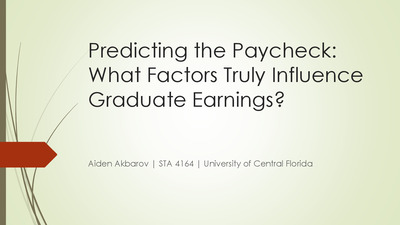
- Kyle Miller, Kyle Carter, Naddya Favela (Research Intensive), Analysis of Workplace Attributes on Annual Income in the Technology Sector
2nd Place
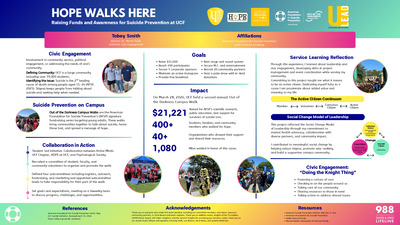
- Tobey Smith (Service-Learning), Hope Walks Here: Raising Funds and Awareness for Suicide Prevention at UCF
3rd Place
- Shayna Caddell, Lucia Hernandez, Correna Bartow, Jonathan Lungstrum, Kevin Wechsler (Service-Learning), Harvesting Hope in Central Florida with Second Harvest Food Bank
Honorable Mentions
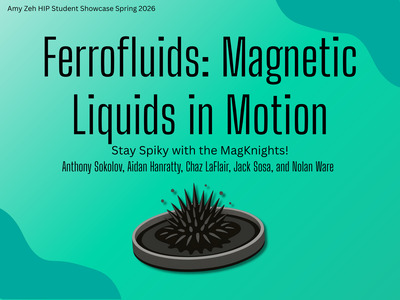
- Nolan Ware, Jack Sosa, Chaz LaFlair, Anthony Sokolov, Aidan Hanratty (Service-Learning), Ferrofluids: Magnetic Liquids in Motion
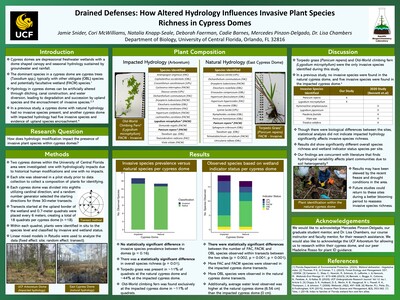
- Jamie Snider, Cori McWilliams, Natalia Knapp-Seale, Deborah Faerman (Research Intensive), Drained Defenses: How Altered Hydrology Influences Invasive Plant Species Richness in Cypress Domes
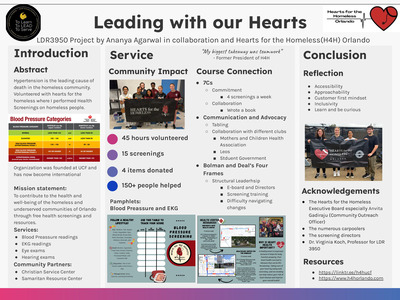
- Gianna Marzullo, Haydn Bonner, Kristina Puscher, Anna Mullins, Gabriella Echeverria, (Service-Learning), Small Acts, Big Impacts: Supporting Hearts for the Homeless
- Isabella Anderson, Jenny Tran, Mia Bukritsky, Kaito Powell, Madison Renda, (Research Intensive), AI Usage and Student Performance
- Yara Elrebey, Keoni Tembrina (Integrative-Learning Experience), Diagnosing Understanding: A clinical approach to teaching general chemistry
Audience Awards from the In-Person Event on April 22, 2026
Grand Prize
- Tara Haubrich, Giavanna Harrington, Jessie Shaffer, Maddison Magyar, Caroline Figueroa (Research Intensive), What the Shell? The Effects of Anthropogenic Wetland Modification on Freshwater Turtle Communities
1st Place
- Danielle Haddox, Katherine Schofield, Ondraya Moore, Nicholas Delatour (Research Intensive), Generational exposure to social media in relation to world events
2nd Place
- Madelyn Moyers, Isabela Rocha, Madison Figueiredo, Sophia Rivera (Service Learning), Jordon Smelski Foundation Pitch
3rd Place
- Terry Dinh, Zhi Lin (Integrative-Learning Experience), Analysis of VO2 & Resting Metabolic Rate assessment for Patient Centered-Care
Honorable Mentions
- Christopher Mayol, Brian Nguyen, Kai Djuren (Global Learning), The Impact of Gaming on Youth
- Avarey Johnson, Tai Powell, Rachel Flis, Rhees Henderson, Enno Turner (Research Intensive), Scute City: Impact of Urbanization on Body Condition of Kinosternon baurii in Central Florida
- Cami Dobson, Addyson Jones, Alexandra Boveil, Giovanni Gioia (Service-Learning), Battling Human Trafficking: How Social Media Advertising Influences Awareness
- Misty Zamora, Juan Sanchez, Geanluka Guedes de Souza, Leah Darby (Service-Learning), Advocating for Amoeba Awareness: The Jordan Smelski Foundation Media Project
-

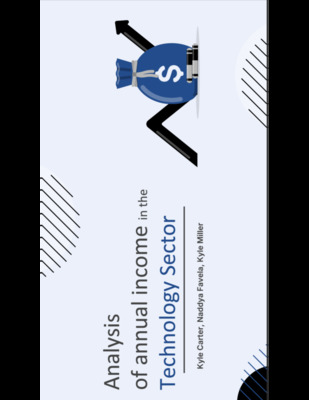
Analysis of Workplace Attributes on Annual Income in the Technology Sector
Kyle J. Miller, Naddya Jannessa Favela, and Kyle A. Carter
-
Knights Pantry: Serving Students Through Basic Needs Support
Kailimar Montanez, Valentina Payares, Tatiana Dickerson, Siera Wells, and Joanna Sali
This project focused on understanding and addressing food insecurity among students at the University of Central Florida through our experience with Knights Pantry. Our goal was to explore how Knights Pantry supports students in need and to see the impact it has on their well-being, academic success, and overall sense of community. As part of this project, we volunteered at the pantry by organizing and restocking items, helping maintain a welcoming space, and observing how students use the resource.
Through this experience, we saw just how many students rely on Knights Pantry and how important it is in helping meet their basic needs. One of the biggest things we learned is how access to food and essentials can directly affect a student’s ability to focus, succeed in school, and feel less stressed. We also realized how meaningful even small acts of service can be. Being part of this experience showed us the importance of community support and reminded us that creating a more inclusive and supportive campus can start with simple actions.
-

What Makes a Listing Worth More? A Regression Analysis of Airbnb Pricing Factors in New York City
Usman Mujtaba and Krish Maisuria
The purpose of this project was to explore the use of linear regression in a real-world application, specifically Airbnb listings in New York City. Throughout the project, we learned how to identify and separate useful data points from those that could negatively impact the model. Additionally, we analyzed the final model to draw meaningful conclusions based on the results.
-
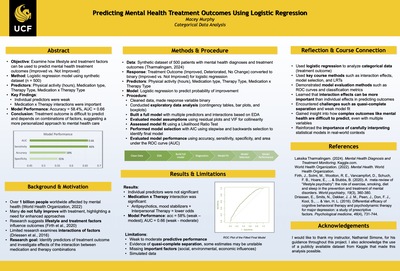
Predicting Mental Health Treatment Outcomes Using Logistic Regression
Macey K. Murphy
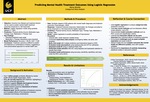
This study examines the relationship between lifestyle, demographic, and treatment-related factors and mental health treatment outcomes. Using a synthetic dataset of 500 observations, a logistic regression model was developed to predict whether patients improved following treatment. The response variable was defined as a binary outcome (Improved vs. Not Improved), and predictors included physical activity, medication type, therapy type, and their interaction. Results indicated that individual predictors were generally not significant on their own; however, interaction effects between medication and therapy type were important, suggesting that treatment effectiveness depends on the combination of interventions rather than any single factor. Model performance was weak to modest, with an accuracy of 58.4% and an AUC of 0.6639, indicating limited ability to distinguish between improved and non-improved patients. Overall, the findings highlight the importance of personalized treatment strategies and suggest that mental health outcomes are influenced by complex factors not fully captured in the dataset.
-
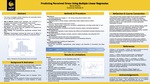
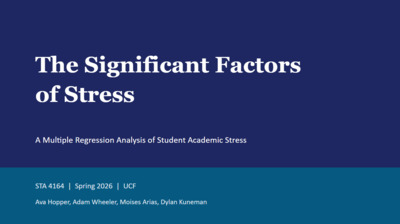
Predicting Perceived Stress Using Multiple Linear Regression
Macey K. Murphy
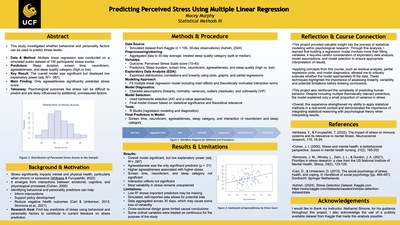
This study examined whether behavioral and personality factors, including sleep, screen time, and personality traits, can be used to predict stress levels. Using a sample of 100 participants, a multiple linear regression model was estimated to assess the relationship between stress and predictors including sleep duration, screen time, neuroticism, agreeableness, and sleep category, as well as selected interaction terms. Results indicated that the overall model was statistically significant but explained only a small to modest proportion of variance in stress (adjusted R² = .087). Among the predictors, agreeableness was the only significant variable, with higher levels associated with greater reported stress. Other variables, including screen time, neuroticism, and sleep category, were not significant predictors in the final model. These findings suggest that personality traits, particularly agreeableness, may play a role in stress experiences, although much of the variability in stress remains unexplained. Attempting to fit a linear model to psychological data proved to be a nuanced and messy process when assessing aspects like model reliability or true assumptions of the data. Overall, the results highlight the complexity of predicting psychological outcomes and underscore the importance of considering both individual differences and additional contextual and statistical factors in future research.
-
The 7 Cups Foundation Service Learning Project
Arlin Naiju
During my time spent volunteering at 7 Cups, I was able to provide emotional support and spread awareness for mental health. I also was able to redefine what leadership means to me through my experiences chatting with various users from around the world. I analyzed these experiences and compared them to topics discussed in my leadership class, such as Bolman and Deal's Four Frames and the 7 C's of the Social Change Model of Leadership Development. I practiced interpersonal communication skills in professional settings and learned important lessons on empathy, emotional intelligence, and mindfulness. As a pre-med student, this experience will remain valuable to me years in the future as I use the skills that I learned in professional medical settings and am able to respond thoughtfully in sensitive situations.
-
Archaeological Use-Analysis of Modified Shell and Bone from the Penny Site, Cape Canaveral Space Force Station
Karina Nemalceff, Greer Monfries, and Amara Martinez
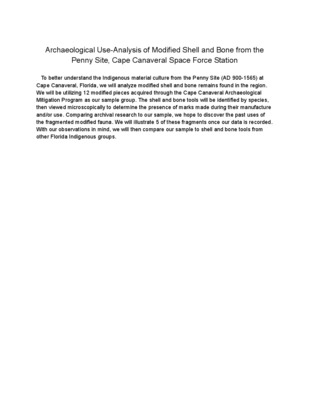
To better understand the Indigenous material culture from the Penny Site (AD 900-1565) at Cape Canaveral, Florida, we will analyze modified shell and bone remains found in the region. We will be utilizing 12 modified pieces acquired through the Cape Canaveral Archaeological Mitigation Program as our sample group. The shell and bone tools will be identified by species, then viewed microscopically to determine the presence of marks made during their manufacture and/or use. Comparing archival research to our sample, we hope to discover the past uses of the fragmented modified fauna. We will illustrate 5 of these fragments once our data is recorded. With our observations in mind, we will then compare our sample to shell and bone tools from other Florida Indigenous groups.
-
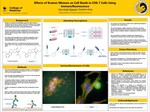
Effects of Kratom Mixture on Cell Death in COS-7 Cells Using Immunofluorescence
Hoa A. Nguyen
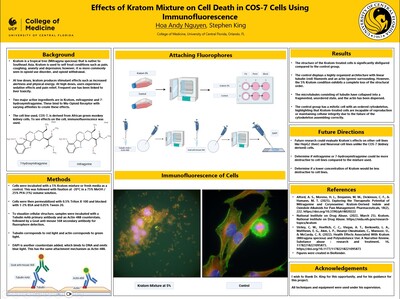
The purpose of this project was to visualize the cellular impact of Kratom (Mitragyna speciosa), a supplement commonly utilized for pain management and opioid withdrawal. The project investigated the effects of a 5% Kratom mixture on COS-7 monkey kidney cells. By using immunofluorescence, the cytoskeleton could be observed, and we can determine if Kratom could result in cellular failure.
In the immunofluorescence protocol, the cells were fixed in a methanol based solution to preserve position, while also permeabilizing the membranes with Triton X-100, and applying specific fluorophores. We used indirect staining for Tubulin (Red, Goat anti-mouse 568), direct staining for Actin (Green, Actin-488), and the DNA (Blue, DAPI) counterstain to visualize parts of the cell. These techniques allowed for high resolution imaging of the cytoskeleton under fluorescent microscopy.
The key thing from this research was the cytoskeleton collapsing due to Kratom. Unlike the control cells, which had organized filaments and active mitosis, the Kratom cells showed unorganized and fragmented protein networks. This shows that there are many aspects that play a role in cell life, while also exploring how certain chemicals can drastically alter cell health.
-
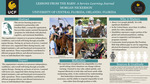
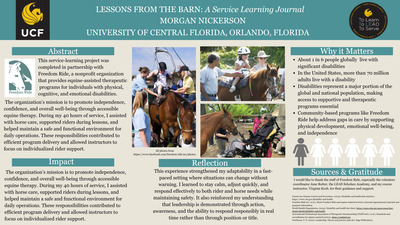
Lessons From the Barn: A Service Learning Journal
Morgan G. Nickerson
This service-learning project was completed in partnership with Freedom Ride, a nonprofit organization that provides equine-assisted services for individuals with physical, cognitive, and emotional disabilities. The organization’s mission is to promote independence, confidence, and overall well-being through accessible therapeutic programs.
During my 40 hours of service, I assisted with horse care, supported riders during lessons, and helped maintain a safe and functional environment for daily operations. These responsibilities contributed to efficient program delivery and allowed instructors to focus on individualized rider support.
Freedom Ride serves over 100 riders weekly and relies on volunteer support to sustain its programs, providing participants with physical, emotional, and social benefits through structured therapeutic activities.
-
The Association Between Sedentary Behavior and Heart Disease Mortality Rates Among Florida Residents.
Umed Norkulov
This research project examines the association between sedentary behavior and Coronary Heart Disease (CHD) mortality among Florida residents. As heart disease remains the leading cause of death in Florida, identifying modifiable risk factors is a public health priority. This study utilizes an ecological design to analyze age-adjusted mortality rates across Florida’s 67 counties, correlating them with the prevalence of sedentary lifestyles reported via the Behavioral Risk Factor Surveillance System (BRFSS).
Key findings indicate that sedentary behavior exceeding 10 hours per day is an independent risk factor for heart disease, increasing risk by 8% to 18%, regardless of other physical activity levels. Through this project, I learned the critical importance of "activity breaks" over traditional exercise-only recommendations and gained proficiency in performing correlation analyses using public health data. These findings suggest that public health interventions should prioritize reducing total daily sitting time to effectively combat heart disease mortality.
The link to the project is https://www.youtube.com/watch?v=CaAJFzQMGp8
-

7Cups Culture Audit Plan
Corban Pendrak, Ryan Ashley, Micaela Olvera, and Jack Svajko
From commitment to civil controversy, 7Cups goes above and beyond in showing just how impacting one conversation can be. An organization designed to assist in online therapy, the 7Cups mission is to spread awareness of therapy, while also providing a safe space to share feelings. As a group, it was our goal to learn more about the organization, not just as students learning about leadership and the social change model, but as people wanting to make a positive difference. Our research was dedicated to not only proving that 7Cups is successful in sharing their mission of an accepting space, but also understanding our own impact in society. In the end, we did exactly that. Corban, Jack, Micaela, and Ryan have sufficiently discovered that 7Cups serves as a vital case study for the Social Change Model, demonstrating that digital accessibility in mental health is not just a service, but a catalyst for community-driven social responsibility.
-
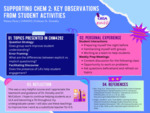
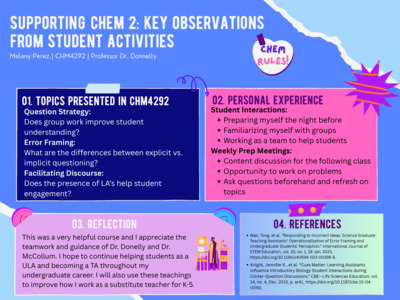
Supporting Chem 2: Key Observations from Student Activities
Melany M. Perez
The purpose of this project is to present information taught regarding how to help facilitate course content for tricky courses such as Chemistry. Key activities were daily worksheets. Key things was importance of group work.
The presentation can be viewed at https://youtu.be/TrPUFA2csPg
-
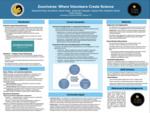
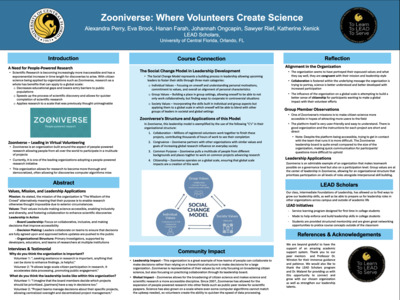
Zooniverse: Where Volunteers Create Science
Alexandra Perry, Johannah Ongcapin, Sawyer Rief, Hanan Farah, Katherine Xenick, and Eva Brock
This project explores Zooniverse, a virtual volunteering platform that enables individuals to contribute to real-world scientific research through people-powered collaboration. As part of the LEAD Scholars Program and the Intermediate Foundations of Leadership course, this study examines how Zooniverse aligns with the Social Change Model, which emphasizes leadership development at the individual, group, and societal levels. Zooniverse’s mission, grounded in the “wisdom of the crowd,” promotes accessibility, inclusivity, and collaboration by allowing participants from diverse backgrounds to engage in research across disciplines such as biology, astronomy, and environmental science. Volunteers contribute to shared scientific goals, demonstrate sustained engagement through personal interest in projects, and collaborate both with one another and with research institutions.
-
Small Habits, GPA Differences: The Relationships Between Student Habits and Academic Performance
Tyler Pham, Mihael Heysen, Yi Chen, Alexandra Honeycutt, and Mai Nguyen
This project looked at how the habits students do every day affect how well they do in school and which things are most important. It uses information from 1,000 students to examine how factors like time spent studying, sleeping, mental health, class participation, and screen time affect grades. All of this information was analyzed to build a model that could predict how well students would do on tests and to make sure the results were accurate.
The results showed that spending more time studying makes the biggest difference in improving grades, while too much screen time can hurt performance. Getting enough rest, exercising, and feeling good mentally also help students do better. One big takeaway is that daily habits are connected, so things like mental health and attendance can affect how effective studying is. Overall, this project shows that everyday choices can have a big impact on academic success.
The project can be viewed at https://www.youtube.com/watch?v=4gFHFantwAo&t=3s
-
Zooniverse and Back to Nature Wildlife Refuge
Phin Ponce, Andrew Pineda, Elena Oberst, Alaiya Braggs, and Oscar Diaz-Garcia
Our group contributed to marine research through Zooniverse by reviewing underwater and aerial videos for the Dolphin Spotting project. We marked when dolphins appeared and described their behavior and surroundings, helping researchers link actions to sound patterns. We also assisted with Shark Spy by identifying shark species and counting individuals in underwater images. These volunteer observations support studies on species diversity, movement, and coastal population trends. Our volunteers at Back to Nature share animal caretaking shifts 8+ hours a week. The purpose of the organization is to rehabilitate and advocate for Florida native wildlife. They carry this out through educational visits for locals, education ambassador residents, and hands-on wildlife caretaking. Each day animal caretaking volunteers are assigned a list of animals and side work tasks to complete by the end of their shift. That includes cleaning, preparing food, providing enrichment, and assisting with rehabilitation without consistent support.
This project can be viewed online at https://www.youtube.com/watch?v=kOihe283V_8
-
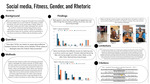
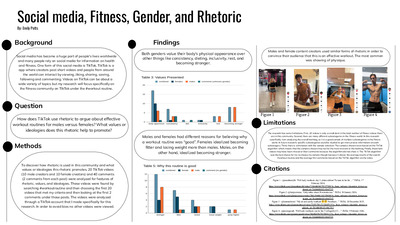
Social media, Fitness, Gender, and Rhetoric
Emily M. Potts
The goal for this study was to find how TikTok uses rhetoric to argue about effective workout routines for males versus females and what values or ideologies does this rhetoric help to promote. People tend to take health and fitness advice from social media although it is not the most creditable place. Understanding how people on TikTok use rhetoric to argue about effective workouts for males versus females and what values and ideologies this rhetoric helps to promote is a gap, although it affects a significant amount of people in today's society.
To discover how rhetoric is used in this community and what values or ideologies this rhetoric promotes, Tik Tok videos and comments were analyzed for rhetoric, values, and ideologies. I found that males and females both valued their bodies' appearance. Males valued becoming big and strong while females valued becoming skinny and fit. Both genders used similar forms of rhetoric, like showing off their physique, for example.
In this study I gained experience researching, looking at trends, and connecting those trends to real world issues and also how people on TikTok use rhetoric in order to get you to believe what they are saying.
-
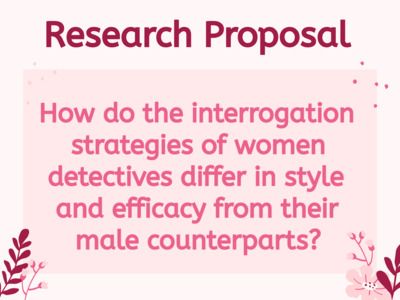
How do the interrogation strategies of women detectives differ in style and efficacy from their male counterparts?
Sarah M. Quinones
This research proposal seeks to examine recorded interrogation footage and in-depth interviews of professional interrogators to analyze how their interrogation styles and efficacies differ between men and women. There is an imminent need for a reformed, standardized, and research-backed interrogation system to improve the efficacy and discriminatory habits of the justice system. The proposed hypotheses include:
-
Transformational interrogation styles yield more cooperative and informative responses than transactional interrogation styles.
-
Because women’s interrogation styles more often align with transformational leadership patterns, their interrogations exhibit higher efficacies.
These hypotheses were drawn following an extensive literature review of the current academic contributions, both in the field of law enforcement and women and gender studies. The review focused on five central topics, including:
-
Gendered policing and communication styles
-
Hyper-masculine workplace culture
-
Efficacy of different policing styles
-
Gendered treatment of female suspects
-
Bias in evaluating male and female officers
Although it may pose a challenge to locate enough ethically sourced interrogations for the analysis and find sufficient woman interrogators (or subjects in general) for the interviews, the research is an important step towards standardizing law enforcement trainings using efficient, research-backed methods, eliminate biases against traditionally feminine-associated policing and interrogation strategies, ultimately allow women police their rightful opportunity for growth without needing to adjust toward aggressive ideals.
-
-
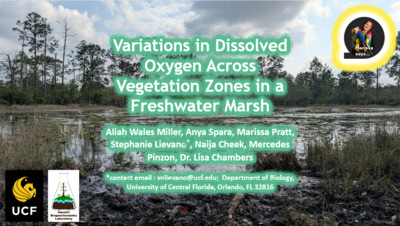
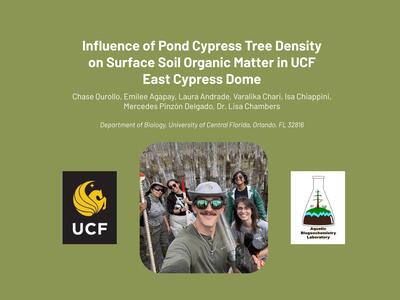
Influence of Pond Cypress Tree Density on Surface Soil Organic Matter in UCF East Cypress Dome
Chase Qurollo, Emilee Agapay, Laura Andrade Barron, Varalika Chari, Isabella Chiappini, Mercedez Pinzón Delgado, and Lisa Chambers
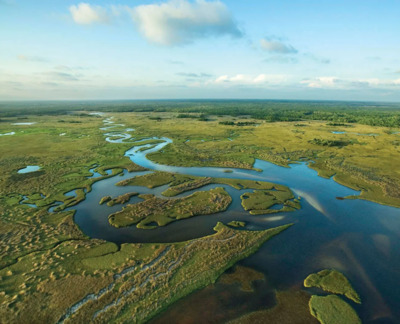
Wetlands are characterized by anaerobic soil conditions that slow organic matter decomposition relative to accumulation, leading to the formation of organic soils. While these systems are recognized as critical carbon sinks, small-scale, place-specific relationships between vegetation density and soil organic matter (SOM) remain underexplored in the isolated cypress dome wetlands of central Florida. This study sought to evaluate how pond cypress density influences SOM within the University of Central Florida’s East Cypress Dome. Nine randomly distributed 10 m × 10 m plots were established, and three sampling points per plot were used to extract 10 cm soil cores. Cypress tree density within each plot was recorded, and the tree nearest each sampling point was measured for diameter at breast height (DBH) at 1.8 m to minimize buttressing effects. Soil cores were bagged, consolidated, dried, and analyzed using a Loss-on-Ignition (LOI) muffle furnace. Bulk density, moisture content, and SOM were calculated and spatially interpolated using ArcGIS. Results were inconclusive with a p-value of 0.0953 that indicates no statistically significant difference in organic matter among density groups. Summary statistics showed that the mean organic matter for low and high density plots are almost the same, suggesting no clear trend across groups. SOM serves as an indicator of ecosystem health, hydrological function, and carbon storage capacity, informing wetland conservation and management strategies. More research would be needed to understand how factors like herbaceous vegetation, light penetration, water level, etc. may have a larger influence on soil organic matter levels within this dome.
-
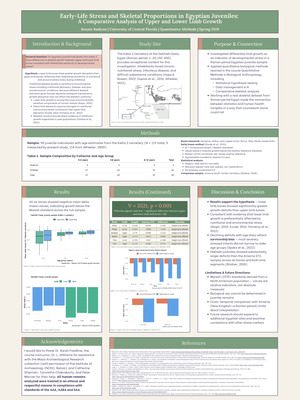
Early-Life Stress and Skeletal Proportions in Egyptian Juveniles: A Comparative Analysis of Upper and Lower Limb Growth
Bonnie Radican
Childhood skeletal growth is sensitive to environmental stress, and different limb segments may respond to developmental disruption unequally. This study explained whether lower limb bones showed greater growth deficits than upper limb bones in juvenile skeletal remains from the Kellis 2 cemetery at the Dakhleh Oasis, Egypt, a Roman period site (approximately AD 50-450) where nutritional stress and disease have been previously documented. The delta 1mean method developed by Goode et al., (1993) was applied to six long bones – humerus, radius, ulna, femur, tibia, and fibula – in a combines sample of 98 individuals drawn from original measurements and the dataset of Sandra Wheeler, using the combined-sex growth standards (Maresh, 1970; Wheeler (2009). All six bones showed negative mean delta 1mean values, indicating growth below expected standards. A Wilcoxon signed-rank test revealed a statistically significant difference between upper and lower limb growth deficits, with lower limb bones showing greater deficits than upper limb bones by a mean of 0.054 log units (Wilcoxon signed-rank test, V = 3521, p < 0.001). Comparison with the Amarna South Tombs Cemetery (STC) indicated that Dakhleh Oasis juveniles experienced larger growth deficits across all bones and both limb segments (Shidner, 2018). These findings support the hypothesis that lower limb growth is more sensitive to environmental stress than upper limb growth and contribute to the growing bioarcheological literature on developmental plasticity and childhood health in ancient Egypt.
-

Cure Film Analysis
Jose A. Ramirez
In this video, I break down and analyze the Japanese horror film Cure. In the analysis, I break down the film utilizing the ideas of various different philosophers such as Martin Heidigger, Charles Taylor, and Mikhail Bakhtin.Through these thinkers, I make the argument that the film is pushing the audience toward a message that blends the boundary between the premodern and modern selves through a critique of modernism, while further opting to show the result of the true degradation of the self.
-
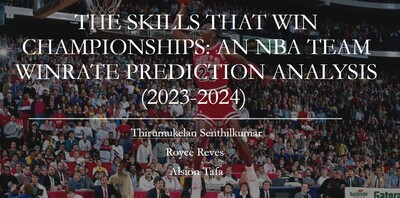
THE SKILLS THAT WIN CHAMPIONSHIPS: AN NBA TEAM WINRATE PREDICTION ANALYSIS (2023-2024)
Royce A. Reeves, Thirumukelan Senthilkumar, and Alsion Tafa
This study examines the relationship between team performance metrics and win percentage in the 2023–24 NBA season. Using team level data sourced from NBA.com and Kaggle, we analyzed variables including shooting efficiency, rebounds, turnovers, and plus/minus. Exploratory data analysis was conducted to assess relationships and address potential collinearity. Multiple linear regression was used to model win percentage, followed by model selection to identify the most impactful predictors. The final model explains approximately 90% of the variation in team success and identifies plus/minus, three-point percentage, turnovers, and rebounds as significant factors. Results indicate that overall team performance three-point shooting, and limiting turnovers are main factors of winning. These findings show the value of statistical modeling and provide insight into which aspects of team performance most statistically contribute to success.
-
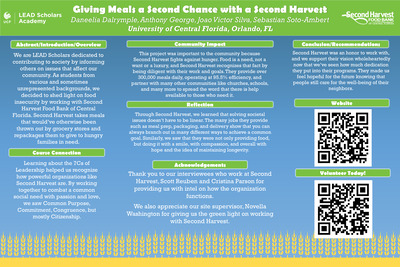
Second Harvest Food Bank Service Learning Project
Haley E. Riker, Aras Demirok, Keaton Huynh, Nathan Wicks, Adrien Hale, and Kai Boxx
-
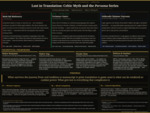
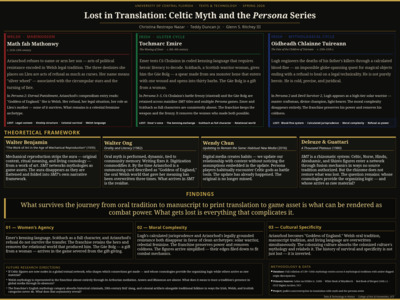
Lost in Translation: Celtic Myth and the Persona Series
Glenn S. Ritchey III, Christina Restrepo Nazar, and Teddy Duncan Jr
This presentation examines how Celtic mythological figures transform when adapted into the Persona and Shin Megami Tensei video game franchises. Comparing medieval Welsh and Irish source texts with their video game incarnations, this project reveals what cultural, narrative, and political specificity disappears in cross-media translation.
The presentation analyzes three case studies. Arianrhod, from the Welsh Mabinogion's Fourth Branch (c. 11th–13th), responds to violated autonomy through legally grounded refusal; Persona reduces her to “Goddess of England,” erasing both her Welsh origin and maternal resistance. Cú Chulainn, from the Irish “Tochmarc Emire” (c. 8th–9th), develops his heroism through Emer's intellectual partnership and Scáthach's martial mentorship; the games retain his battle frenzy (ríastrad) and spear (Gáe Bolg) while systematically removing the women who made both possible. Lugh, from “The Fate of the Children of Tuireann” (c. 13th–15th), engineers a lethal blood-fine through legal technicality; Persona preserves his solar power and unstoppable spear but strips away his calculated coldness.
Drawing on Walter Benjamin (aura and reproduction), Walter Ong (orality and literacy), Wendy Chun (habitual media), and Deleuze and Guattari (rhizomatic networks), the project documents three systematic erasures: female agency is removed, moral complexity is flattened, and cultural specificity is reassigned. The pattern holds across all three figures: what survives the journey into the franchise is what can be rendered as power; what gets lost is everything that complicates it—determined as much by what a medium can represent as by what a culture chooses to carry forward.