Complete Schedule
Building the Next Generation of Researchers: Mentorship, Skill Development, and Student Growth in the OneUSF Summer Research Program
Presentation Type
Mini-Presentation
Location
Dr. Phillips Academic Commons, Room 218
Event Website
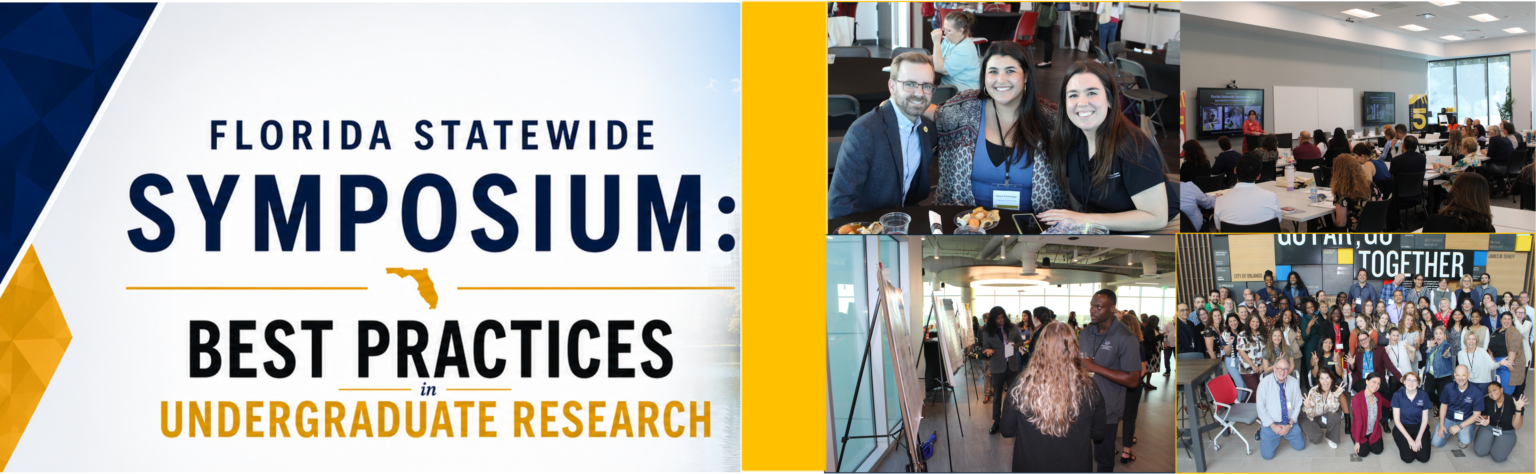
https://researchsymposium.ucf.edu/
Start Date
17-10-2026 12:25 PM
End Date
17-10-2026 12:55 PM
Description/Abstract
Undergraduate research provides students with opportunities to build technical and professional skills, develop meaningful mentoring relationships, and explore future academic and career pathways. This abstract explores post survey outcomes from the 2025–2026 OneUSF Summer Undergraduate Research Program at the University of South Florida. The interdisciplinary program combined faculty-mentored research structured one-credit undergraduate research courses, professional-development workshops, and community-building experiences.
Post-program survey data were analyzed using descriptive quantitative methods and analysis of open-ended responses. 70 undergraduate researchers participated in the program and among 70 students 36 were Research Experiences for Undergraduate (REU) scholars funded by National Science Foundation. 57 students responded to post-survey who rated their overall research experience, 80.7% described it as Good or Excellent, while 82.5% reported a positive mentorship experience. Students developed competencies in scientific literature review, experimental and project design, laboratory or fieldwork, data analysis, research communication, and research ethics. Qualitative responses emphasized mentorship as an important factor in developing confidence, independence, resilience, and scholarly identity. Students increasingly described research as iterative, collaborative, self-directed and reported learning to troubleshoot challenges, interpret unexpected results, seek appropriate guidance, and make independent research decisions. The experience also influenced future goals: 76.5% intended to continue research, 90.2% would recommend the program, and 74.5% planned to apply to graduate school.
The findings demonstrate that effective undergraduate research requires structured guidance, regular communication, research ownership, opportunities for independence, professional development, and an inclusive scholarly community. Overall, planned mentorship can strengthen research confidence, professional growth, and emerging scientific identity
Building the Next Generation of Researchers: Mentorship, Skill Development, and Student Growth in the OneUSF Summer Research Program
Dr. Phillips Academic Commons, Room 218
Undergraduate research provides students with opportunities to build technical and professional skills, develop meaningful mentoring relationships, and explore future academic and career pathways. This abstract explores post survey outcomes from the 2025–2026 OneUSF Summer Undergraduate Research Program at the University of South Florida. The interdisciplinary program combined faculty-mentored research structured one-credit undergraduate research courses, professional-development workshops, and community-building experiences.
Post-program survey data were analyzed using descriptive quantitative methods and analysis of open-ended responses. 70 undergraduate researchers participated in the program and among 70 students 36 were Research Experiences for Undergraduate (REU) scholars funded by National Science Foundation. 57 students responded to post-survey who rated their overall research experience, 80.7% described it as Good or Excellent, while 82.5% reported a positive mentorship experience. Students developed competencies in scientific literature review, experimental and project design, laboratory or fieldwork, data analysis, research communication, and research ethics. Qualitative responses emphasized mentorship as an important factor in developing confidence, independence, resilience, and scholarly identity. Students increasingly described research as iterative, collaborative, self-directed and reported learning to troubleshoot challenges, interpret unexpected results, seek appropriate guidance, and make independent research decisions. The experience also influenced future goals: 76.5% intended to continue research, 90.2% would recommend the program, and 74.5% planned to apply to graduate school.
The findings demonstrate that effective undergraduate research requires structured guidance, regular communication, research ownership, opportunities for independence, professional development, and an inclusive scholarly community. Overall, planned mentorship can strengthen research confidence, professional growth, and emerging scientific identity
https://stars.library.ucf.edu/researchsymposium/2026/CompleteSchedule/17